There is no shortage of therapies offered for cerebral palsy. There is a shortage of honest information about which of them actually change anything.
In 2020 a team led by Iona Novak published a systematic review that graded 398 intervention outcomes for cerebral palsy against the evidence behind each one, and sorted them into a traffic light system. The results are sobering and genuinely useful.
- 14% got a green light, meaning do it
- 66% got a weak positive yellow, meaning probably do it
- 17% got a weak negative yellow, meaning probably do not
- 3% got a red light, meaning do not do it
This page works through the green-light therapies, what each actually involves, and the ones on the red list, several of which are still widely sold to families.
Build Skills Through Play
AR games designed with therapists — for children with ADHD, ASD, DCD, and more. Just a laptop camera. No downloads.
Try Free for 14 DaysThe One Thing the Effective Therapies Have in Common
Before the list, the pattern underneath it, because it is more useful than any individual entry.
Every therapy that came out well shares a mechanism the reviewers call experience-dependent plasticity. In plainer terms: the child does the movement themselves, actively, many times, aiming at something they want to achieve.
Every therapy that came out badly has the opposite shape. The child is passive. Something is done to them, by a therapist or a machine or a chamber, and they are not the one generating the effort.
That single distinction will tell you more about an unfamiliar therapy than any brochure. If your child is being moved rather than moving, be skeptical.
The 10 Therapies With the Strongest Evidence
1. Goal-directed training
Therapy organized around a specific thing the child wants to do, such as getting a cup to their mouth or climbing onto the sofa unaided, rather than around a body part. It works because the goal supplies both the repetition and the motivation, and because it is the child's goal rather than the therapist's.
2. Bimanual training
Structured practice using both hands together, usually in activities that genuinely require two hands. For children with hemiplegia this addresses the real-world problem more directly than working the affected hand alone.
3. Constraint-induced movement therapy
The stronger arm is restrained, usually with a mitt or a light cast, so the child has to use the affected one. Intensive and demanding, but among the best-evidenced interventions for one-sided involvement. It is often paired with bimanual training rather than used alone.
4. Task-specific and mobility training
Practising the actual task, not a component of it. If the goal is stairs, the therapy is stairs. Skill in cerebral palsy transfers poorly between tasks, which is why generic exercises usually underdeliver.
5. Strength training
Progressive resistance work. This was avoided for years on a belief that it would worsen spasticity, and that belief turned out to be wrong. Strength training is safe and effective.
6. Fitness training
Cardiovascular conditioning. Children with cerebral palsy tend to be less active than their peers, which compounds over time into reduced endurance and independence. Fitness is a target in its own right, not a bonus.
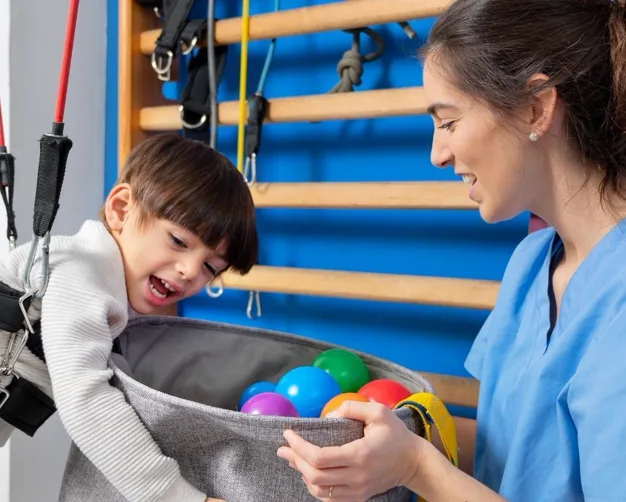
7. Treadmill training, including with partial body weight support
A harness carries part of the child's weight so they can practise a walking pattern they could not yet sustain unsupported. High repetition of the real movement, which is exactly the mechanism that works.
8. Home programs
Structured practice at home, set up with a therapist and carried out by the family. Home programs are green-lit, which matters, because the amount of practice available in a weekly clinic session is small compared with what a week at home can hold.
9. Casting, and botulinum toxin combined with occupational therapy
Serial casting to maintain range, and botulinum toxin injections to reduce spasticity. Note the pairing: botulinum toxin plus occupational therapy is green-lit. The injection opens a window, and the therapy is what turns that window into a skill.
10. Environmental enrichment and hippotherapy
Enrichment means deliberately building a home environment that invites movement and exploration rather than one that removes the need for it. Hippotherapy, meaning therapy delivered on horseback, also came out well, likely because it demands continuous postural adjustment while being something children want to do.
Two others worth knowing about: literacy interventions and acceptance and commitment therapy both came out green, which is a reminder that outcomes for a child with cerebral palsy are not only motor.
A Note on Sensory Activities
A lot of people search for sensory activities for cerebral palsy, so this needs care.
Sensory integration therapy, as a formal treatment intended to improve motor function, received a red light. The evidence does not support it for that purpose.
That is not the same as saying sensory play is worthless. Textured play, water play, and messy play are enjoyable, they support engagement and tolerance, and for a child with sensory sensitivities they can make daily care easier. Those are real benefits and worth having.
The distinction is what you expect them to do. As play and as regulation, sensory activities have a place. As a treatment for movement, they should not displace goal-directed, active practice.
Oral sensorimotor therapy is a separate matter and was green-lit, for feeding and oral motor function specifically.
What the Evidence Does Not Support
Four interventions received a red light.
- Craniosacral therapy. No evidence of benefit.
- Hyperbaric oxygen therapy. Studied repeatedly and does not work for cerebral palsy. It is also expensive and frequently marketed directly to families.
- Neurodevelopmental therapy in its original passive form. Sometimes called Bobath. The traditional version, where a therapist handles the child to inhibit abnormal patterns while the child stays passive, does not produce the outcomes hoped for. Note that many therapists trained in this tradition now practise in an active, goal-directed way, which is a different thing.
- Sensory integration therapy. As above.
Suit therapy received a weak negative rating with reported adverse effects including overheating and respiratory compromise.
If a therapy you are paying for appears here, it is a reasonable conversation to have with your child's team. The reason these persist is rarely bad faith. They are often long-established, and families are understandably willing to try things.
Why Starting Early Matters
Cerebral palsy can now be detected far earlier than the traditional two-year mark, often before six months corrected age, using a combination of MRI, the General Movements Assessment, and the Hammersmith Infant Neurological Examination.
This matters because the interventions that work depend on the child's own active movement shaping the developing brain, and the first two years are when that process is most responsive. Waiting for diagnostic certainty before starting means spending the most valuable window doing nothing.
If your child is under two and someone is suggesting a wait-and-see approach, it is worth asking specifically about early detection tools and early intervention referral.
Making Therapy Work Between Sessions
Home programs being green-lit is the most actionable finding here, because the arithmetic is stark. An hour of therapy a week is roughly one percent of a child's waking time. What happens in the other ninety-nine percent decides most of the outcome.
A few principles carry over from everything above.
Pick goals your child cares about. Not a therapy goal translated into home language. Something they actually want to be able to do.
Make them do it themselves. Helping a child through a movement feels supportive and does very little. The effort has to be theirs, even when the result is slower and messier.
Repetition, spread out. Many short bouts beat one long session, both for fatigue and for how motor learning consolidates.
Change the environment, not just the exercise. Putting a favorite toy somewhere that requires reaching, standing, or stepping builds practice into the day without a session having to be scheduled.
Ask the therapist for the mechanism. If you understand why a thing is being asked for, you can improvise sensibly when the day does not go to plan.
Motion-based games can fit here too. A game where the child moves their body to play is active, self-initiated, and repetitive in exactly the way the evidence favors, and it makes the volume of repetition easier to reach because a child will choose to do it. Our games for children with cerebral palsy are built on that principle. Games do not replace a therapist, who is the one who can tell you which specific thing to target.
Active, Repetitive, Child-Led Practice
Both read whole-body movement through the laptop camera, so the child generates the effort themselves. That is the mechanism the evidence favors, and the volume is easier to reach when a child chooses to play.

Questions Worth Asking Your Therapy Team
Most parents arrive at appointments without a clear sense of what to ask, and the appointment fills itself with whatever the clinician thinks to cover. A short list changes that, and none of these questions are confrontational. Good therapists welcome them, because a family who understands the reasoning delivers the home practice far better.
- What is the specific functional goal we are working toward, and how will we know we have reached it?
- Is my child active during this, or is something being done to them?
- How much practice does this need each week to work, and what should we be doing at home?
- What does the evidence say about this approach for a child like mine?
- Has hip surveillance been arranged? It is green-lit, easy to overlook, and prevents a serious complication.
One more thing worth raising is what happens next. Goals shift as a child grows, and a program that fit a four-year-old often stops fitting at seven, when school demands, independence, and the child's own priorities have all changed. Asking how and when goals get revisited keeps therapy attached to the life your child is actually living rather than to a plan written years earlier.
See It In Action
Book a free demo and see how WonderTree works for your child, classroom, or therapy center.
Book a Free Demo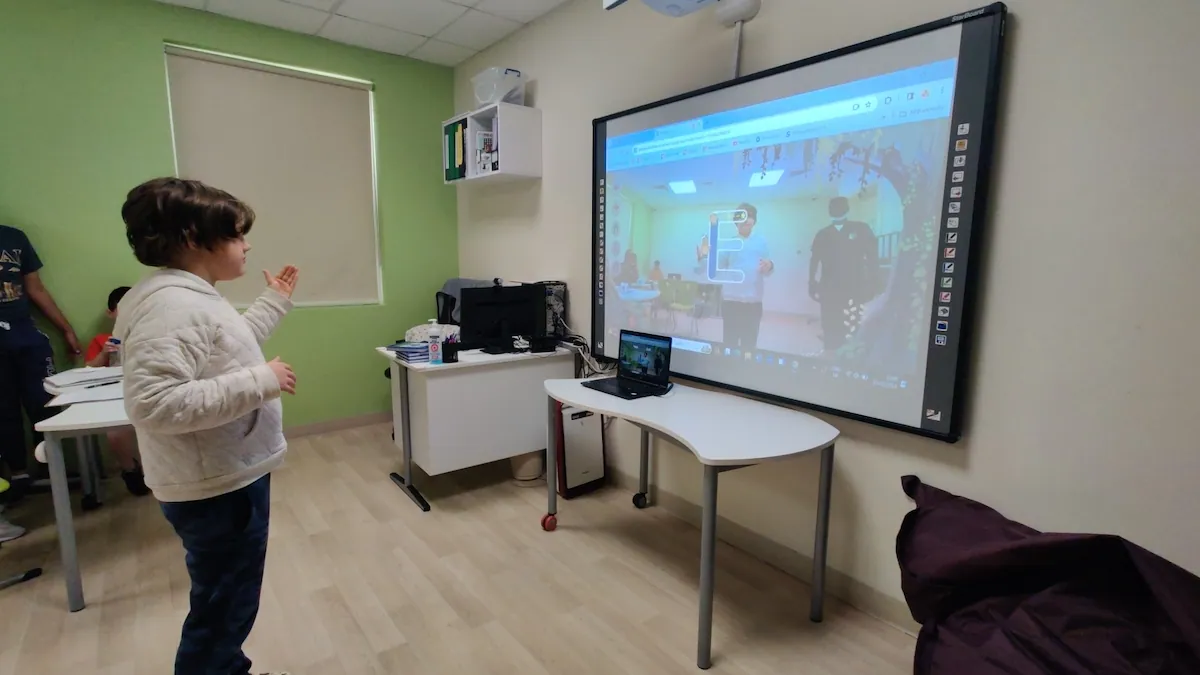
Frequently Asked Questions
What therapies work best for cerebral palsy?
The interventions with the strongest evidence include goal-directed training, bimanual training, constraint-induced movement therapy, task-specific and mobility training, strength and fitness training, treadmill training, home programs, casting, botulinum toxin combined with occupational therapy, environmental enrichment, and hippotherapy. What they share is that the child actively generates the movement themselves, repeatedly, toward a goal they care about.
Which cerebral palsy treatments does the evidence not support?
A 2020 systematic review gave red lights to craniosacral therapy, hyperbaric oxygen therapy, neurodevelopmental therapy in its original passive form, and sensory integration therapy. Suit therapy received a weak negative rating with reported adverse effects including overheating and respiratory compromise.
Are sensory activities useful for a child with cerebral palsy?
It depends what you expect from them. Sensory integration therapy as a treatment for motor function received a red light in the evidence review. Sensory play as play, supporting enjoyment, engagement, and tolerance of touch and texture, is worthwhile in its own right and can make daily care easier. It just should not displace active, goal-directed practice. Oral sensorimotor therapy is a separate case and is well supported for feeding.
What occupational therapy activities help with cerebral palsy?
The best-supported occupational therapy work is goal-directed and task-specific: practicing the actual activity the child wants to manage, such as dressing, feeding, or handwriting, rather than isolated exercises. Bimanual training and constraint-induced movement therapy are both strongly evidenced for one-sided involvement, and occupational therapy following botulinum toxin injections is green-lit as a combination.
Does strength training make spasticity worse?
No. This was believed for years and avoided on that basis, and the belief turned out to be wrong. Progressive strength training is safe for children with cerebral palsy and is one of the green-lit interventions.
How early can cerebral palsy be diagnosed and treated?
Cerebral palsy can often be detected before six months corrected age using MRI alongside the General Movements Assessment and the Hammersmith Infant Neurological Examination. This matters because effective interventions rely on the child's own active movement shaping a developing brain, and the first two years are the most responsive period. Waiting for diagnostic certainty spends that window.
How do I judge a therapy nobody has explained to me?
Ask whether your child is active or passive during it. Every intervention that came out well involves the child generating the movement themselves, repeatedly, toward a goal. Every intervention that came out badly involves something being done to a passive child. That single question is a reliable first filter.
Was this article helpful?
Written by

Last medically reviewed on September 9, 2026
How we reviewed this article:
- (2020). State of the Evidence Traffic Lights 2019: Systematic Review of Interventions for Preventing and Treating Children with Cerebral Palsy Current Neurology and Neuroscience Reports, 20(2), 3. https://doi.org/10.1007/s11910-020-1022-z
- (2017). Early, Accurate Diagnosis and Early Intervention in Cerebral Palsy: Advances in Diagnosis and Treatment JAMA Pediatrics, 171(9), 897-907. https://doi.org/10.1001/jamapediatrics.2017.1689
September 9, 2026
Rebuilt around the 2020 Evidence Alert Traffic Light review, naming both the green-light therapies and the four that received red lights.
June 20, 2023