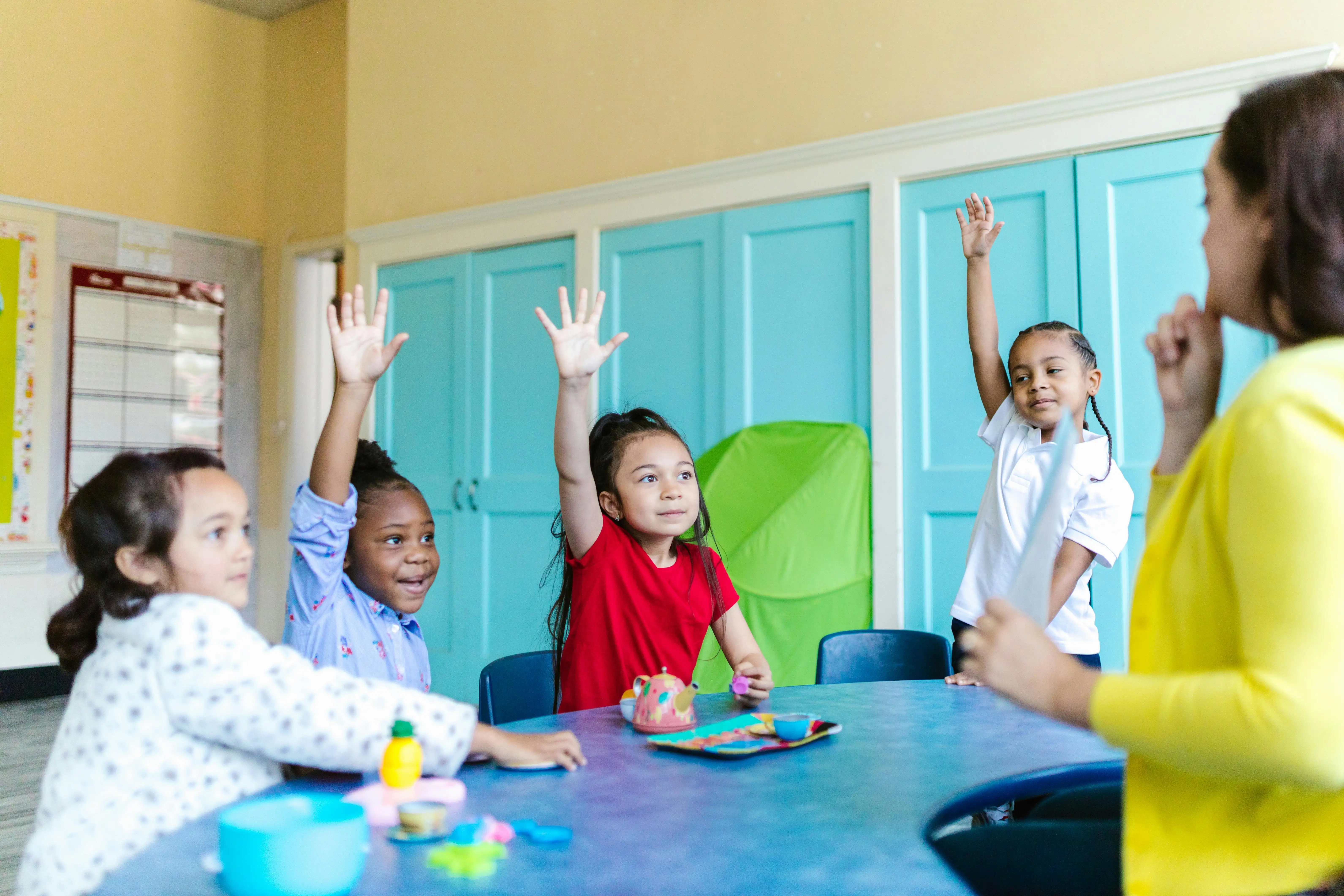
Social emotional development is how a young child learns to recognise what they feel, say what they need, get along with other children, and recover when something does not go their way. In the preschool years it is the difference between a child who can ask to join a game and one who stands at the edge of it.
The activities below are short, need almost nothing, and are meant to be repeated. That last part matters more than which one you pick.
What Social Emotional Development Looks Like at This Age
In a preschooler it shows up as small, concrete things: waiting for a turn, asking an adult for help instead of melting down, using a word rather than a hand, noticing that another child is crying.
Underneath those moments a child is building emotional vocabulary, self-regulation, empathy, turn-taking, communication and the beginnings of friendship. Research on school readiness consistently finds these skills predict how well a child settles into formal schooling, separately from anything academic.
The order matters. A child has to be able to name a feeling before they can manage it, which is why so much of the list below is about noticing and labelling rather than about behaviour.
Build Skills Through Play
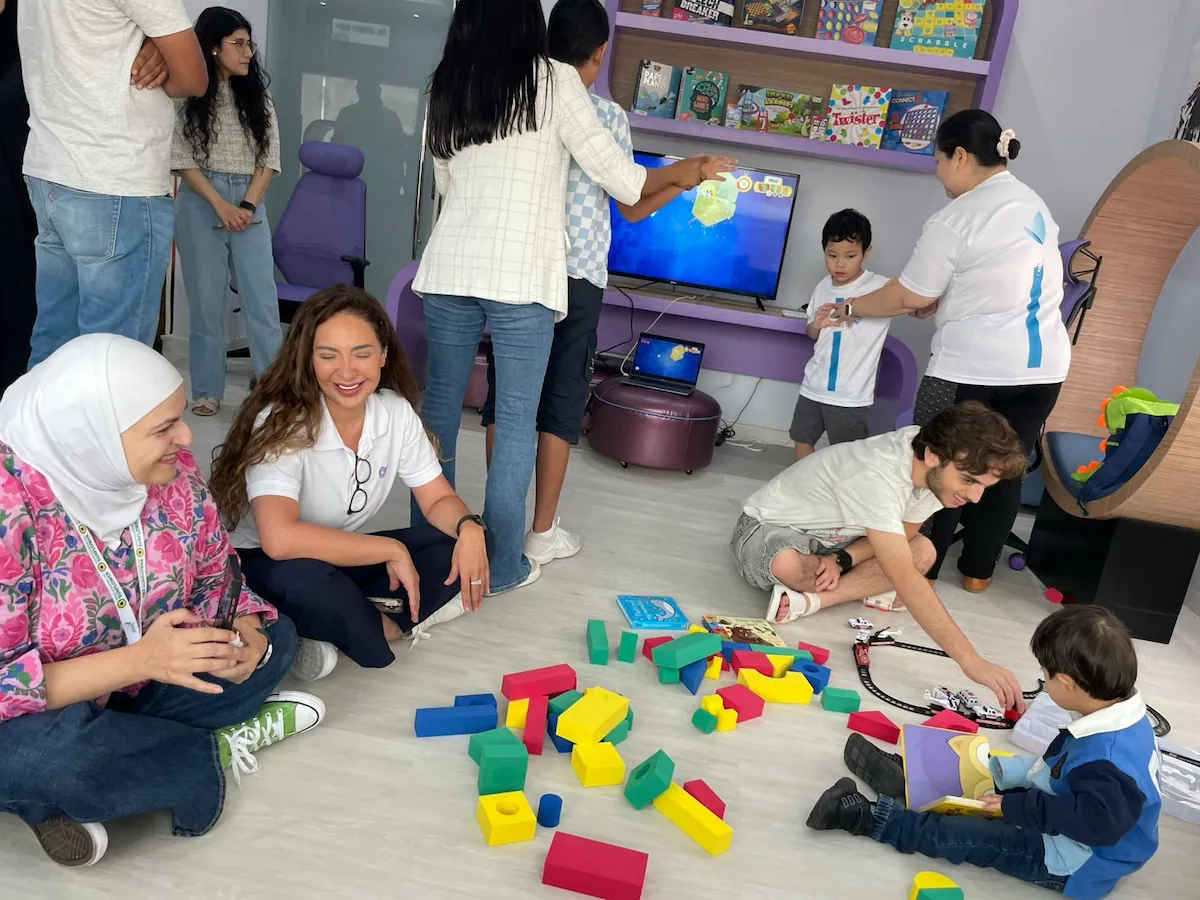
AR games designed with therapists — for children with ADHD, ASD, DCD, and more. Just a laptop camera. No downloads.
Try Free for 14 Days15 Social Emotional Development Activities
Grouped by the skill each one builds. Start with the group that matches what your child finds hardest.
Noticing and Naming Feelings
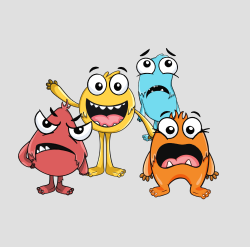
- Feelings flashcards. Simple faces: happy, sad, angry, worried, excited. Name it, copy the face, then talk about a time they felt that way.
- Mirror faces. Pull expressions at a mirror together and copy each other. Children see what a feeling looks like from the outside.
- Emotion matching cards. Match a word to a face, or two faces showing the same feeling.
- Story-time check-in. Pause a book to ask how the character feels, or what your child would do in that situation.
- Music and movement. Move the way a feeling sounds: calm, excited, sleepy, silly. Useful for children who find talking about feelings hard.
Waiting and Self-Control
- Turn-taking ball game. Roll a ball back and forth with "my turn" and "your turn" said out loud each time.
- Waiting games. Freeze dance or red light, green light. Impulse control practice that does not feel like practice.
- Group clean-up challenge. A timer or a song turns tidying into a cooperative task with a clear end.
- Calm-down breathing. Bubbles, a pinwheel or pretend candles. Keep it playful and short, and do it when the child is calm so the tool is familiar when it is needed.
Rehearsing Social Situations
- Puppet role play. Act out sharing, waiting, apologising or asking to join in. A puppet can get it wrong without the child feeling exposed.
- Pretend play with figures. Dolls or animals working through making friends, falling out, helping someone upset.
- Friendship scripts. Teach the actual words: "can I play too", "my turn next", "stop please", "I need help". Practise them at a calm moment. A child cannot reach for language they have never said out loud.
- Kindness jar. A token in a jar each time they share, help or use kind words. Makes an invisible thing countable.
Learning Through Movement
- Follow the leader, with feelings. Walk like you feel proud, jump like you feel excited, move slowly like you feel tired.
Structured Games
Some preschoolers will sit with a game for twenty minutes and a flashcard for twenty seconds. If that describes your child, a structured game gives you the repetition without the negotiation.
Games That Build Emotional Awareness
For preschoolers who stay with a game far longer than a flashcard. Both run in the browser in short rounds.

Choosing the Right One
- Struggles to express feelings: faces, mirrors, feeling words, story questions. Keep it visual and light.
- Struggles with waiting or sharing: simple games with obvious rules, like ball rolling or freeze dance.
- Learns best by moving: imitation, music, whole-body activities.
Adapting for Children With Additional Needs
Children with autism, ADHD or a developmental delay generally need the same activities rather than different ones. What changes is the delivery: more repetition, more visual support, the same structure every time, and no time pressure.
It also helps to lower the social stakes. A puppet, a game or a mirror lets a child practise without an audience, which is often the barrier rather than the skill itself.
See It In Action
Book a free demo and see how WonderTree works for your child, classroom, or therapy center.
Book a Free Demo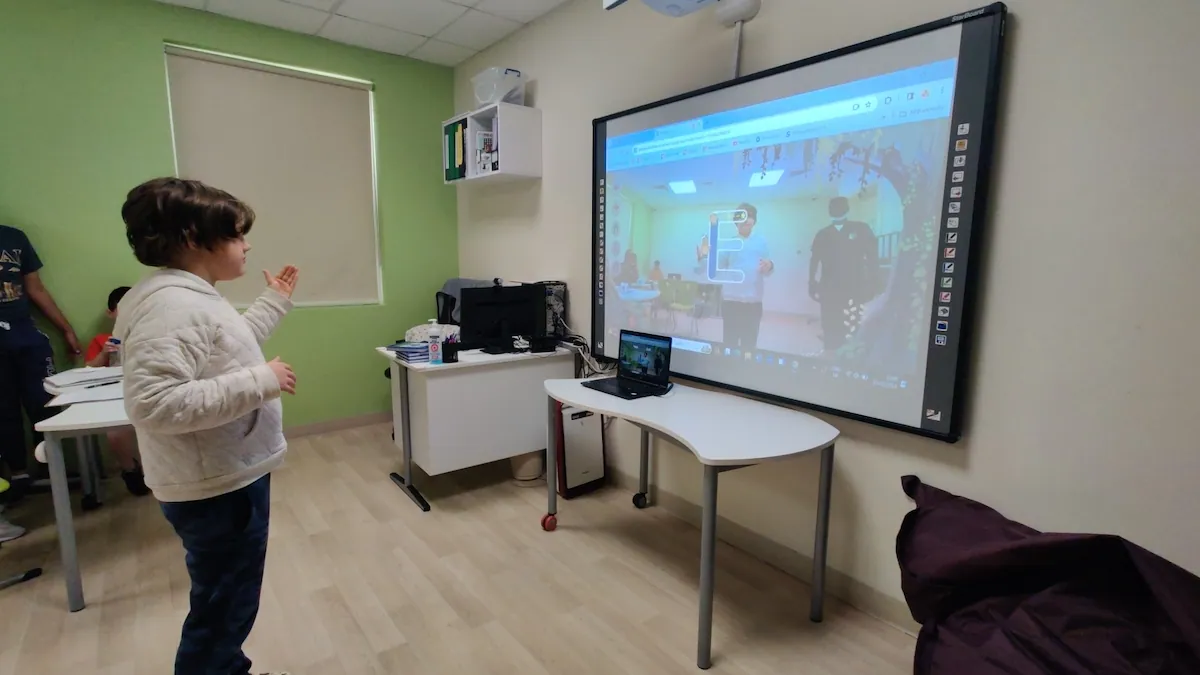
Frequently Asked Questions
What is social emotional development in preschoolers?
It is how young children learn to recognise feelings, manage them, connect with other children and respond to everyday situations. In practice it looks like waiting for a turn, asking for help, using words instead of hitting, and noticing when another child is upset.
What activities support social emotional development?
Feelings flashcards, mirror games, puppet role play, turn-taking games, story-time emotion questions and simple breathing practice all work. The common thread is that they are short, repeatable, and practised through play rather than instruction.
At what age does social emotional development start?
It begins in infancy through the back-and-forth of everyday interaction, long before a child can talk about feelings. The preschool years are when it becomes visible, because that is when children are first managing relationships with other children rather than only with adults.
How do I help a preschooler who hits or grabs when frustrated?
Give the child words to use before the moment arrives. Rehearse short phrases like "my turn next" or "stop please" while everything is calm, and pair them with one simple calming tool. A child cannot reach for language they have never practised.
Are these activities suitable for children with special needs?
Yes, usually with more repetition and more visual support rather than different activities. Children with autism, ADHD or a developmental delay often do best when the activity is predictable, short, and repeated the same way each time.
How long should each activity take?
Five minutes is plenty at this age. Stopping while a child is still enjoying it makes them more likely to want it again tomorrow, and it is the repetition across days that builds the skill.
Was this article helpful?
Written by

Last medically reviewed on September 9, 2026
How we reviewed this article:
- (2024). Fundamentals of SEL: the CASEL 5 competencies CASEL. https://casel.org/fundamentals-of-sel/
- (2006). Social-emotional competence as support for school readiness: what is it and how do we assess it? Early Education and Development, 17(1), 57-89. https://www.tandfonline.com/doi/abs/10.1207/s15566935eed1701_4
- (2024). CDC's Developmental Milestones — Learn the Signs. Act Early. Centers for Disease Control and Prevention. https://www.cdc.gov/ncbddd/actearly/milestones/index.html
- (2024). Bright Futures Guidelines for Health Supervision of Infants, Children, and Adolescents, 4th Edition American Academy of Pediatrics. https://publications.aap.org/brightfutures
September 9, 2026
Migrated from WordPress. Activities grouped by skill, early-childhood research citations added.
March 18, 2026