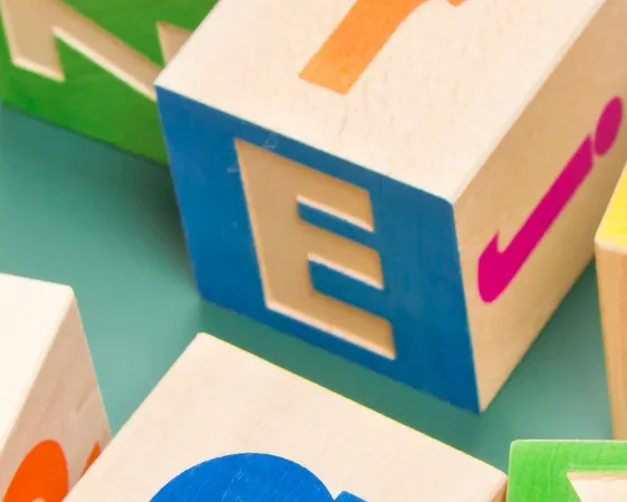
Almost everything written about play-based learning says the same thing: play is powerful, children learn better through play, and every skill on the list improves.
That is broadly true, and it is also vague enough to be useless if you are a teacher deciding how to run a Tuesday morning, or a parent trying to work out whether the preschool down the road has a real approach or a marketing line.
So this page does two things. It sets out the nine benefits, and it tells you what the research actually supports, including the outcomes where play-based learning does not outperform ordinary teaching. That second part matters more than it sounds, because knowing where the advantage is real is what lets you use it deliberately.
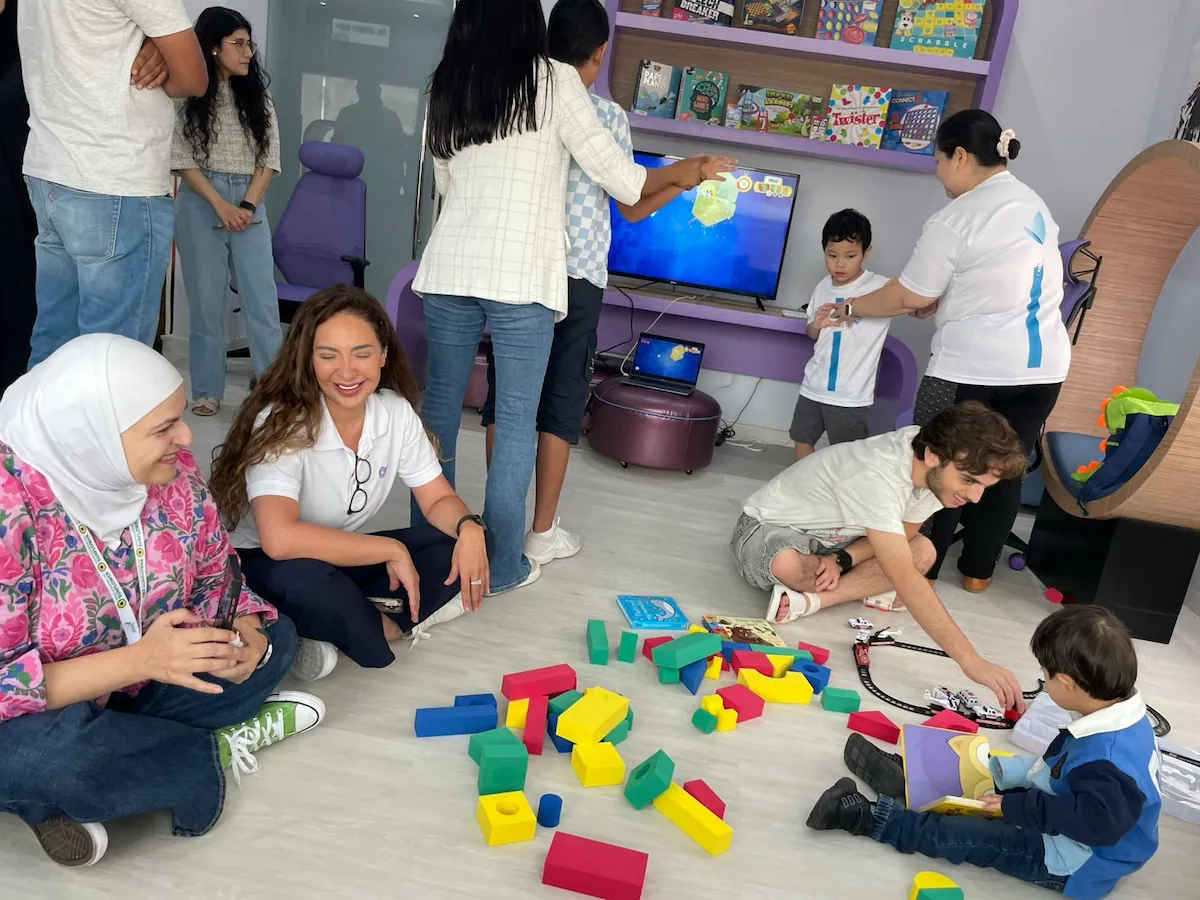
Build Skills Through Play
AR games designed with therapists — for children with ADHD, ASD, DCD, and more. Just a laptop camera. No downloads.
Try Free for 14 DaysWhat Play-Based Learning Actually Means
Play-based learning is an approach where play is the vehicle for learning rather than the reward that comes after it. Children build, sort, role-play, tell stories, and solve problems, and the curriculum is delivered inside those activities instead of alongside them.
The distinction that gets lost in most explanations is that there are three different things here, not one.
- Free play is entirely child-led. The child chooses the activity, the direction, and when it ends. An adult may be present but does not steer.
- Guided play is child-led with an adult holding a learning goal in mind. The child still chooses and directs, but the adult sets up the materials, asks questions, and gently nudges attention toward the thing being learned.
- Direct instruction is adult-led. The adult decides the activity, the sequence, and the outcome.
When research finds an advantage for play-based learning, it is almost always guided play that produces it. This is the single most practical thing to know about the approach, and it is why a classroom where adults step back entirely usually gets weaker results than one where adults stay involved without taking over.
The elements that make it work
- Hands-on activity. Children handle materials rather than watch a demonstration.
- Genuine child choice. The child picks the direction, which is what sustains the attention the learning depends on.
- Adult involvement without takeover. Questions, comments, and well-chosen materials rather than instructions.
- Social interaction. Negotiating, sharing, and explaining to another child does work that solo play does not.
- Open ends. Activities with more than one right answer leave room for the thinking to happen.
What the Evidence Actually Shows
A 2022 systematic review and meta-analysis in Child Development pulled together 39 studies covering 3,893 children aged one to eight, and compared guided play directly against direct instruction.
Guided play came out ahead in three areas:
- Early math, with a small positive effect
- Shape knowledge, with a medium effect
- Task switching, one component of executive function, with a medium effect
It also beat free play substantially on spatial vocabulary, which is the clearest single piece of evidence that the adult's involvement is doing the work rather than the play alone.
And it found no significant difference from direct instruction on early literacy, expressive and receptive vocabulary, behavior regulation and inhibitory control, or social and emotional outcomes such as prosocial behavior.
That last paragraph is the one most articles leave out. It does not mean play-based learning fails on those things. It means it works about as well as good direct teaching does, so the reason to choose it there is engagement, sustainability, and the child's experience rather than a measurable academic edge.
The review also found the effect peaked at moderate intensity, around six to twenty sessions, with diminishing returns beyond that. More is not automatically better.
Separately, the American Academy of Pediatrics published a clinical report in 2018 making the case that play supports the development of executive function, language, and social skills, and that it helps buffer children against stress. It went as far as recommending that pediatricians actively promote play at well-child visits, which is an unusual step for a medical body to take about something as ordinary as playing.
The 9 Benefits of Play-Based Learning
1. It builds problem-solving and critical thinking
Open-ended activities force decisions. A tower that keeps falling is a problem the child owns, and the reasoning they do to fix it is the point of the activity, not a distraction from it.
2. It develops motor skills
Climbing, running, and balancing build gross motor control. Threading, drawing, and manipulating small pieces build fine motor control and the hand strength that writing later depends on.
3. It strengthens social and emotional skills
Sharing, negotiating turns, and repairing a fallout after an argument over a toy are rehearsals for the rest of life. These happen naturally in play and are difficult to teach directly.
4. It supports creativity and imagination
Activities with no fixed answer leave space to invent. A cardboard box that becomes a spaceship is a child practicing abstraction, which is the same skill that later reads a symbol as a number.
5. It expands language and communication
Role-play and storytelling pull in vocabulary a child would not otherwise use, and the back-and-forth of play requires listening as much as talking. Note that on measured vocabulary outcomes, guided play performed comparably to direct instruction rather than better.
6. It builds confidence and independence
Choosing what to do, and living with how it turns out, is how children learn that their decisions matter. Adult-led activity rarely offers that, because the adult has already made the decisions.
7. It supports early math and spatial reasoning
This is where the evidence is strongest. Sorting, building, pattern-making, and comparing sizes are early math, and guided play measurably outperformed direct instruction on both math and shape knowledge.
8. It reduces stress
Play gives children a way to process what has happened to them and a setting where they are in control. The AAP report treats this as one of play's central functions rather than a side effect.
9. It sustains motivation over time
Children keep doing what they enjoy. Over months and years, the approach a child stays engaged with beats the one that produces a slightly better result in a single session and then loses them.
What Changes at Each Stage
Toddlers and preschoolers
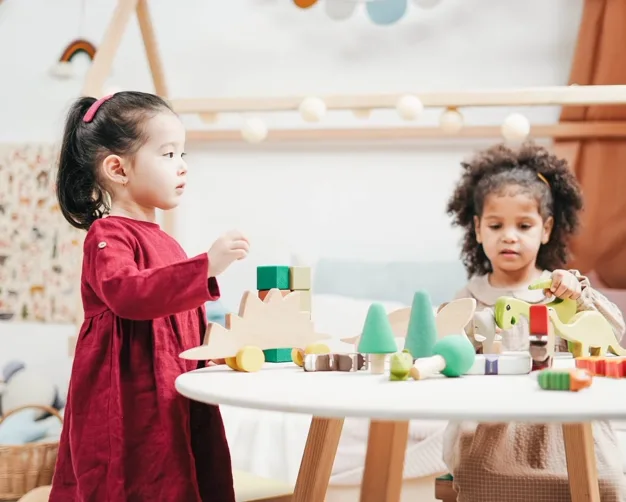
The focus is sensory exploration, early language, and gross motor development. Play is mostly parallel at this age, meaning children play beside each other before they play with each other, and that is developmentally normal rather than a problem to fix.
Kindergarten
Cooperative play arrives properly, and with it the negotiation, turn-taking, and shared goals that make group learning possible. This is also where guided play starts to carry real curricular weight, particularly in early math.
Primary school
Play does not stop being useful when formal instruction begins. It shifts toward structured games, projects, and problem-solving with clearer goals. The evidence on task switching is relevant here, because that flexibility underpins a lot of classroom learning.
What It Looks Like in Practice
The most common failure is treating play-based learning as an absence of teaching. A room where adults have withdrawn is free play, and free play consistently produces weaker learning outcomes than guided play.
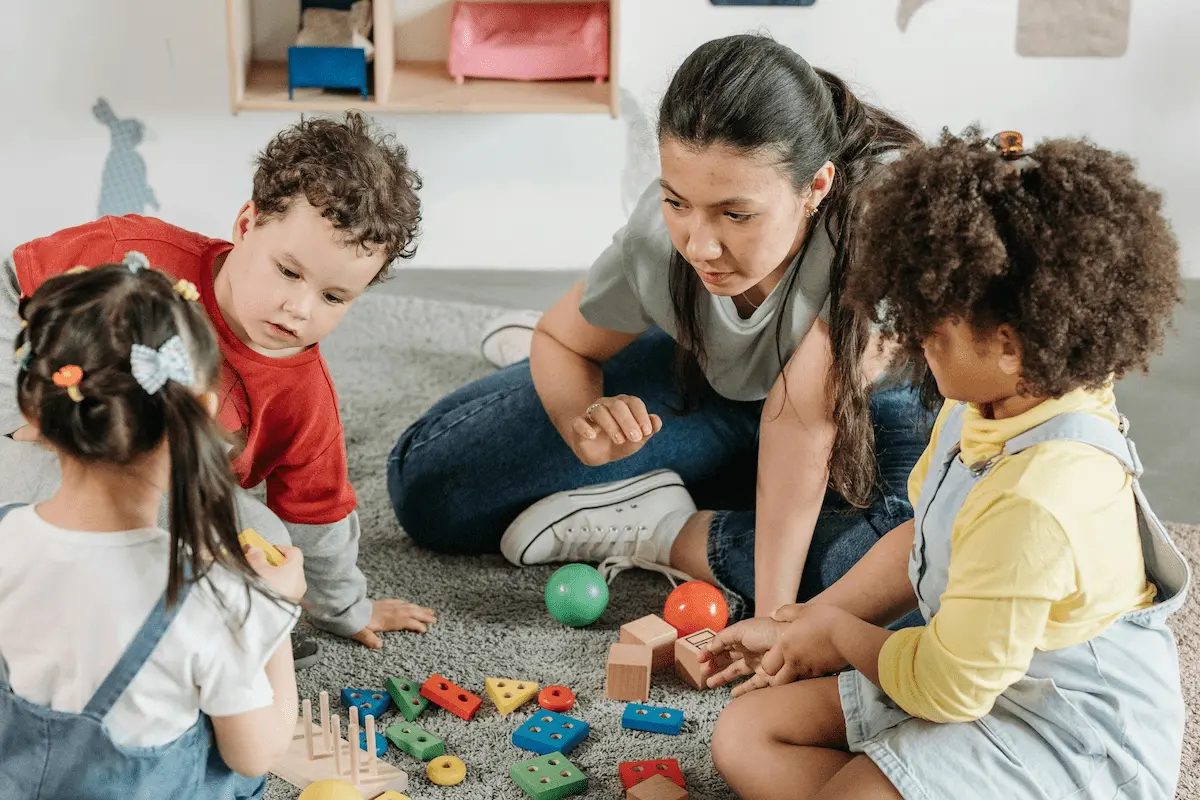
What guided play looks like in practice is narrower and more deliberate. The adult chooses the materials with a goal in mind, such as putting out blocks in specific shapes when shape knowledge is the target. The child then leads, and the adult stays alongside asking open questions: what happens if you turn it, which one is bigger, why did that fall. The goal never gets announced, and the child never stops being the one making decisions.
Two practical points from the research. Keep the sessions to a moderate run rather than doing it constantly, since the benefit plateaus. And pick the approach to match the outcome, because if the target is decoding words, well-structured direct teaching does the job just as well and often more efficiently.
For children who need extra support, the same principle applies. The activity has to be something the child would choose, with the skill practice built into it, rather than a drill dressed up as a game.
Guided Play, Running in the Browser
Both games put a learning goal inside something a child would choose to do anyway. They use the laptop camera, so the child moves to play rather than sitting still.


Three Common Misreadings
"Play-based means no structure." It means the structure sits in the materials and the adult's questions rather than in instructions to the child. Guided play is more planned than it looks, not less.
"It works better for everything." It does not. The measured advantage is in math, shape knowledge, and cognitive flexibility. On literacy and social outcomes it performs about as well as good direct teaching.
"More play is always better." The meta-analysis found returns diminishing past roughly twenty sessions. Play-based learning is a tool to use deliberately, not a volume dial.
See It In Action
Book a free demo and see how WonderTree works for your child, classroom, or therapy center.
Book a Free Demo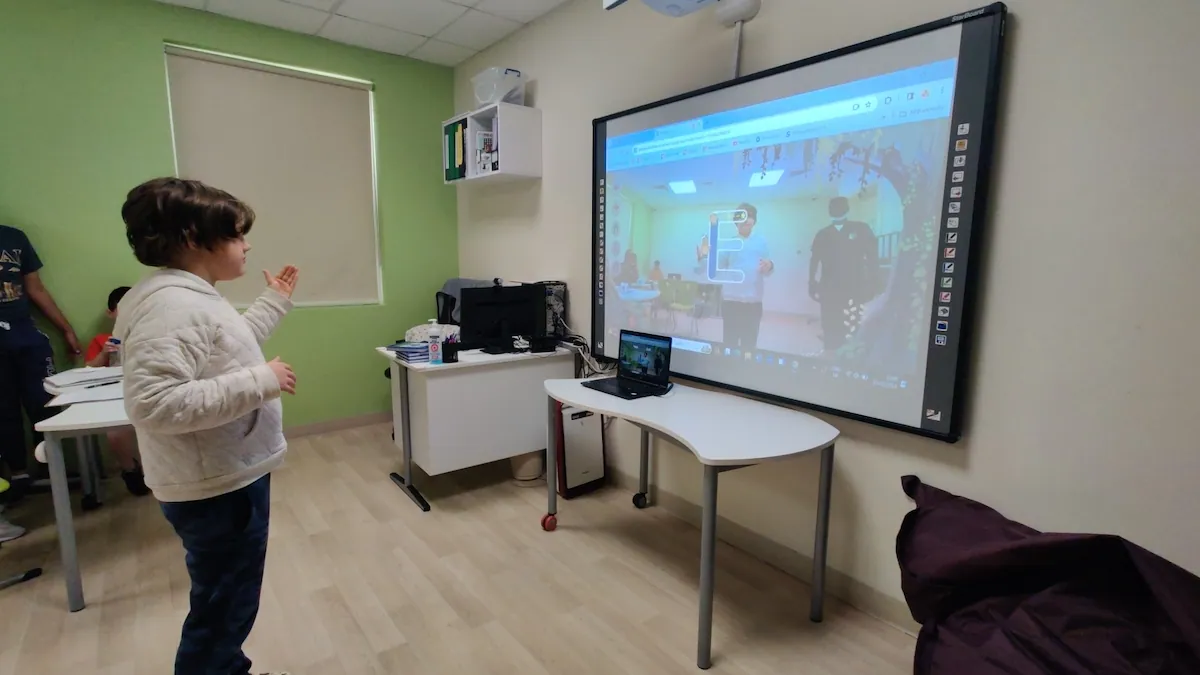
Frequently Asked Questions
What is play-based learning and why is it beneficial?
Play-based learning is an approach where play is the vehicle for learning rather than a reward afterwards. Children build, sort, role-play, and solve problems, and the curriculum is delivered inside those activities. The measured benefits are strongest in early math, shape knowledge, and cognitive flexibility, and it also supports motor skills, language, confidence, and motivation over time.
Why is play-based learning important in early childhood education?
In the early years, children learn by handling things and making choices rather than by receiving instruction. Play delivers that while also building the social, emotional, and motor foundations that formal schooling later depends on. The American Academy of Pediatrics goes further, treating play as important enough to child development and stress regulation that it recommends pediatricians actively promote it.
What is the difference between free play and guided play?
Free play is entirely child-led with no adult learning goal. Guided play is still child-led and child-directed, but an adult has chosen the materials and stays involved with open questions aimed at a specific goal. This distinction matters because when research finds an advantage for play-based learning, it is guided play producing it. Guided play substantially outperformed free play on spatial vocabulary in a 2022 meta-analysis.
Does play-based learning improve academic skills?
In some areas, yes. A 2022 meta-analysis of 39 studies covering 3,893 children found guided play outperformed direct instruction on early math, shape knowledge, and task switching. On early literacy and vocabulary it performed about as well as direct instruction rather than better, so it is not automatically the stronger choice for every subject.
At what age is play-based learning most effective?
The research base covers children aged one to eight, and the approach is used most heavily in preschool and kindergarten. It remains useful into primary school, where it shifts toward structured games and problem-solving projects rather than open exploration.
Can play-based learning be used in a regular classroom?
Yes, and it does not require reorganizing the whole timetable. The practical version is choosing materials with a specific learning goal in mind, letting children direct the activity, and staying alongside with open questions. Research suggests a moderate run of sessions, roughly six to twenty, before returns start to diminish.
Is play-based learning beneficial long term?
The strongest long-term argument is motivation. Children keep doing what they enjoy, and an approach a child stays engaged with over years tends to beat one that wins a single session and then loses them. The task-switching finding also matters, since cognitive flexibility underpins a lot of later classroom learning.
Was this article helpful?
Written by

Last medically reviewed on September 9, 2026
How we reviewed this article:
- (2022). Can guidance during play enhance children's learning and development in educational contexts? A systematic review and meta-analysis Child Development, 93(4), 1162-1180. https://doi.org/10.1111/cdev.13730
- (2018). The Power of Play: A Pediatric Role in Enhancing Development in Young Children Pediatrics, 142(3), e20182058. https://doi.org/10.1542/peds.2018-2058
- (2013). Guided Play: Where Curricular Goals Meet a Playful Pedagogy Mind, Brain, and Education, 7(2), 104-112. https://doi.org/10.1111/mbe.12015
September 9, 2026
Rewritten around the guided play distinction and a 2022 meta-analysis, including the outcomes where play-based learning showed no advantage over direct instruction.
December 18, 2024