Telling a dysregulated child to "just calm down" is a bit like telling a rainstorm to stop raining. It rarely works, and it usually just leads to a cycle of escalating frustration for both the child and the adult.
For young children, especially neurodivergent kids navigating ADHD, Autism, Cerebral Palsy, or Down Syndrome, emotional regulation isn't just a personality trait they are born with. It is a highly complex neurological skill that must be actively taught, modeled, practiced, and physically experienced.
When a child's nervous system is overwhelmed by sensory input, transition anxiety, or social frustration, they enter a state of "fight, flight, or freeze." In this state, the logical part of their brain effectively goes offline. They cannot physically access the reasoning needed to self-soothe or talk through their problems. They need concrete tools. They need targeted movement. And they need safe spaces to process what is happening inside their bodies.
If you are looking for practical, evidence-based ways to support a child's nervous system, here is our deep dive into highly effective, inclusive activities for emotional regulation that you can seamlessly integrate into the classroom or at home.
1. "Heavy Work" (Deep Proprioceptive Input)
When a child is emotionally spiraling, their nervous system feels like it is floating in chaos. It is searching for physical boundaries to help them feel secure and grounded. "Heavy work" refers to any activity that pushes or pulls against the body, providing deep proprioceptive input to the joints and muscles.
How to do it: Have the child push a heavy laundry basket full of clothes across a carpeted floor, carry groceries, do wall push-ups, or wipe down the whiteboards using wide arm circles.
Why it works: This deep pressure acts as a biological reset button. It releases serotonin and dopamine in the brain while naturally lowering cortisol (the primary stress hormone). It is one of the fastest, most reliable ways to help a highly energized or anxious child physically center themselves so they can return to a state of learning.
Build Skills Through Play
AR games designed with therapists — for children with ADHD, ASD, DCD, and more. Just a laptop camera. No downloads.
Play 2 Games Free2. Therapy-Style Check-In Prompts (Building an Emotional Vocabulary)
Sometimes, intense emotional dysregulation happens simply because a child lacks the vocabulary to explain what is wrong. If you've ever asked a kindergartener, "How was school?" and gotten the classic, one-word response "Good." …you're not alone.
The fastest way to get real conversation (and build language + relationships) is to swap "quiz" questions for open-ended prompts that invite kids to explain, imagine, and share feelings.
How to do it: Instead of interrogating them with "Are you mad?", use low-pressure, therapy-friendly prompts during calm moments. You don't need "perfect questions"; you just need repeatable routines (like Morning Meeting, transitions, or dinner) and a big bank of prompts you can pull from any time. You might ask, "If your shoes could talk, what would they say today?" or "What is something you did recently that made you feel proud?"
Why it works: This creates a safe, established baseline for communication. When big feelings do happen, the child is already accustomed to talking about their inner world.
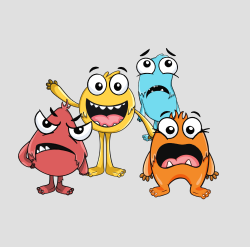
3. Digital Emotion Mirroring (The WonderTree "Feelings" Game)
Games That Build Emotional Regulation
Two of the games these activities use. Both run in the browser, free to try.

For many young children, especially those who are pre-verbal, speech-delayed, or in the middle of a sensory meltdown, asking them to "use their words" is like speaking a language they can't access. The language center of their brain is temporarily unavailable.
How to do it: Boot up the WonderTree Feelings game. Instead of answering questions, the child stands in front of the webcam and is prompted to physically mirror different emotional expressions on the screen, like making a mad face, a surprised face, or a happy face.
Why it works: It entirely bypasses the need for verbal language. By gamifying emotional recognition, children connect the physical muscle movements of their face to the abstract concept of an emotion. It gives them a safe, low-stakes environment to practice identifying feelings so that when a real meltdown happens, they have a physical memory of what that emotion looks and feels like.
4. Active AR Brain Breaks
When a child is dysregulated, forcing them to sit still at a desk or stare at a static worksheet can actually escalate their anxiety. The adrenaline pooling in their body needs an outlet.
How to do it: Use Augmented Reality (AR) games to channel that nervous energy into structured, goal-oriented play. A WonderTree game like Bubble Pop requires a child to reach, stretch, jump, and cross their midline to pop targets on the screen.
Why it works: Movement is medicine. Using their whole body as the controller bridges the gap between physical exertion and cognitive focus. It burns off excess adrenaline and actively regulates the nervous system without feeling like "therapy."
5. The "Tell Me More" Strategy
Often, children act out because they feel unheard, rushed, or misunderstood. A language-rich environment is one where children have many chances for back-and-forth conversations all day, not just during one activity.
How to do it: When a child is starting to express a feeling, resist the urge to immediately fix the problem or dismiss it. Teacher tip: When a child answers, try one follow-up: "Tell me more."
Why it works: Saying "Tell me more" is a powerful tool of validation. It forces the adult to pause and listen, and it prompts the child to dig a little deeper into their emotional vocabulary, stretching their ability to regulate their own thoughts through spoken language.
6. Rhythmic Co-Regulation
A deeply dysregulated child cannot self-regulate; they must co-regulate with a calm, grounded adult. The human brain naturally syncs to rhythmic, predictable patterns.
How to do it: Sit near the child and introduce a slow, steady rhythm into the environment. You can slowly bounce a therapy ball back and forth, gently drum a predictable beat on your knees together, or take turns tapping a balloon to keep it in the air.
Why it works: Rhythm activates the lower parts of the brain (the brainstem) and signals to the central nervous system that the environment is safe. Once the physical rhythm is established, the child's heart rate will slow down, and their emotional rhythm will naturally follow yours.
7. Sensory "Cool Down" Bins
For children who become easily overstimulated by the noise of a classroom or complex social demands, offering a localized, tactile escape can prevent a full meltdown.
How to do it: Keep a dedicated, easily accessible bin filled with soothing sensory items. Good options include kinetic sand, a soft square of velvet, a highly resistant squishy stress ball, or a "calm down jar" (a sealed bottle filled with water, clear glue, and slow-moving glitter).
Why it works: When big emotions hit, the child can retreat and focus their entire mental bandwidth on the physical sensation in their hands. This shifts their brain's focus away from the abstract emotional trigger and onto a predictable, controllable sensory experience.
8. Visual Schedules for Transition Anxiety
Transitions — moving from recess to math, or from playtime to bedtime — are one of the most common triggers for emotional dysregulation, particularly for children with Autism or ADHD who rely heavily on predictability.
How to do it: Create a visual schedule using pictures or icons to map out the child's day. When a transition is coming up, don't just use your words. Point to the visual schedule and give a 5-minute and 2-minute warning.
Why it works: Spoken words disappear the second you say them. A visual schedule acts as an external hard drive for their brain, removing the anxiety of the unknown and allowing them to prepare emotionally for the next activity.
9. Celebrating Micro-Milestones
Emotional regulation isn't about never getting angry, sad, or overwhelmed; it is about how efficiently a child can handle and recover from those feelings.
How to do it: Make a habit of actively praising the process of regulation, not just the absence of bad behavior. Say things like, "I noticed how incredibly frustrated you were when your block tower fell over, but I am so proud of how you took a deep breath and asked for help."
Why it works: Children will repeat whatever behavior is reinforced. By celebrating the tiny, easily missed moments where they successfully manage a difficult feeling, you build their internal confidence and give them a mental template to follow the next time they feel a storm brewing.
See It In Action
Book a free call and see how WonderTree works for your child, classroom, or therapy center.
Book a Free Call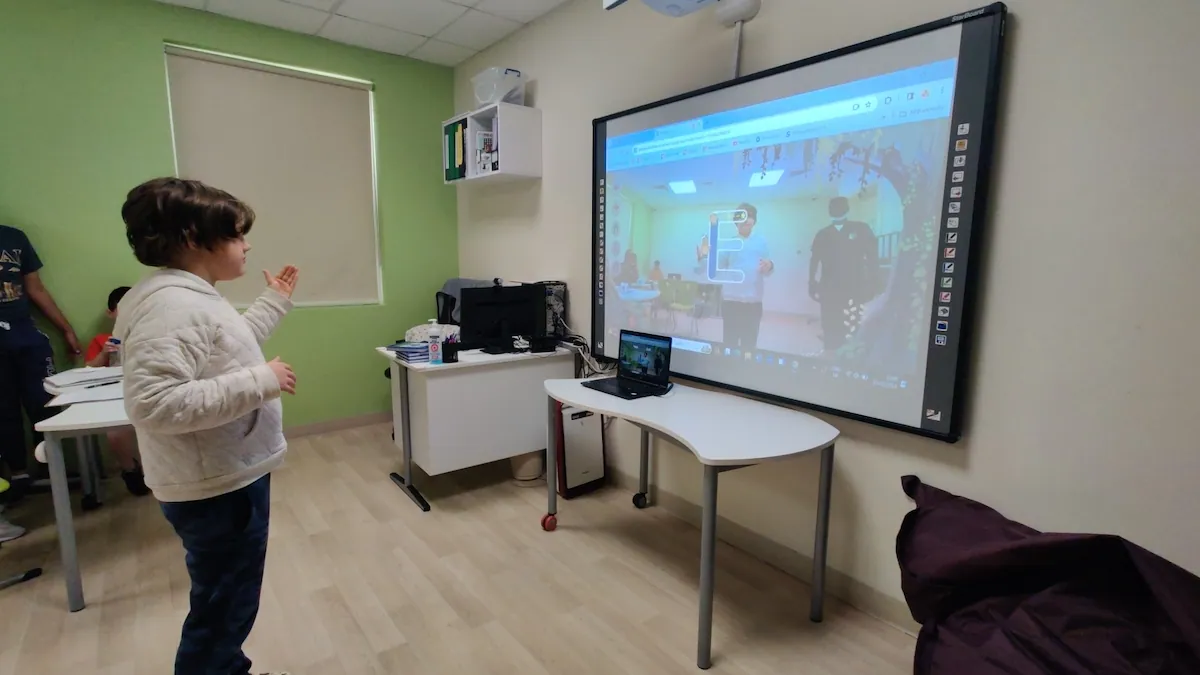
Frequently Asked Questions
What is emotional regulation in children?
Emotional regulation is a child's ability to manage and respond to their emotional experiences in a way that is socially acceptable and flexible. For young children — especially those with ADHD, Autism, or sensory processing differences — this is a neurological skill that develops over time with explicit teaching, co-regulation with adults, and repeated practice through activities and play.
What are the signs of emotional dysregulation in kids?
Common signs include frequent meltdowns or tantrums that seem disproportionate to the trigger, difficulty recovering from frustration, physical aggression, shutting down or withdrawing, rapid mood swings, and inability to use language during stressful moments. These behaviors often intensify during transitions, noisy environments, or social conflicts.
How can WonderTree games help with emotional regulation?
WonderTree's AR-based games help children practice emotional awareness through physical movement. The Feelings game lets kids mirror facial expressions to connect physical actions with emotions, while movement-based games like Bubble Pop burn off excess adrenaline and regulate the nervous system — all without requiring verbal language, making them accessible for pre-verbal or speech-delayed children.
At what age should you start teaching emotional regulation?
Emotional regulation foundations begin in infancy through co-regulation with caregivers. By ages 2-3, children can start learning simple emotional vocabulary and coping strategies. Structured activities like sensory bins, visual schedules, and movement-based games are effective from ages 3-8, which is the critical window for building self-regulation skills.
What is the difference between co-regulation and self-regulation?
Co-regulation is when a calm adult helps a dysregulated child return to a balanced state through presence, rhythm, or shared activity. Self-regulation is when a child can independently recognize and manage their emotions. Children must experience co-regulation repeatedly before they can develop self-regulation — it is a skill built through modeling, not instruction alone.
Was this article helpful?
Written by

Last medically reviewed on June 12, 2026
How we reviewed this article:
- (2024). Essentials for Parenting Toddlers and Preschoolers Centers for Disease Control and Prevention. https://www.cdc.gov/parents/essentials/index.html
- (2018). Promoting Young Children's Social and Emotional Health Young Children, NAEYC. https://www.naeyc.org/resources/pubs/yc/mar2018/promoting-social-and-emotional-health
- (2024). Self-Regulation: The Cornerstone of Emotional Health Zero to Three. https://www.zerotothree.org/resource/self-regulation-the-cornerstone-of-emotional-health/
- (2024). Emotional Regulation in Children American Academy of Pediatrics — HealthyChildren.org. https://www.healthychildren.org/English/healthy-living/emotional-wellness/Pages/default.aspx
June 12, 2026
February 7, 2026