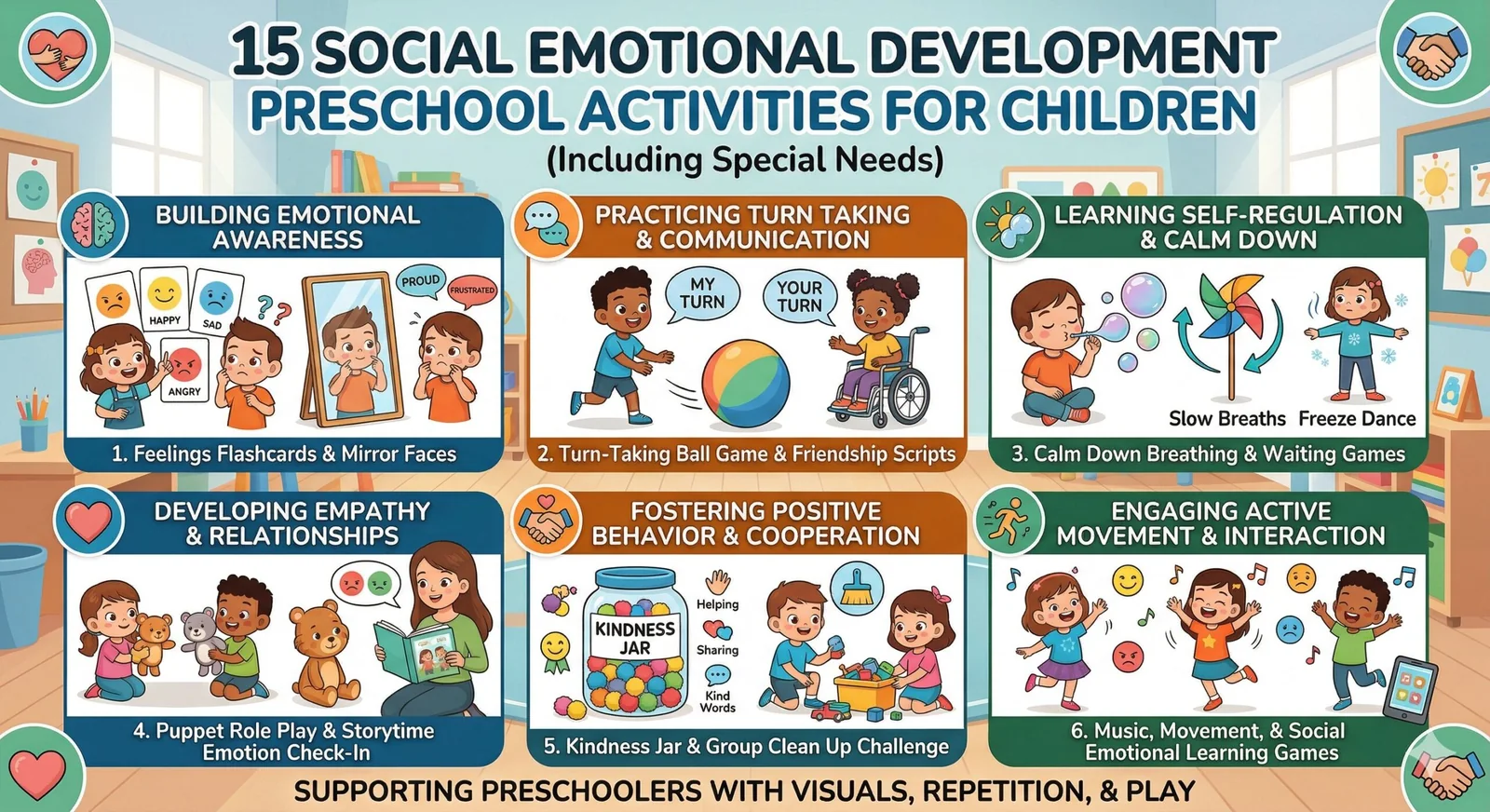
Cognitive development is the part of growing up that is hardest to see happening. A child gets taller and you notice. A child gets better at holding two ideas at once and you mostly do not.
This covers what cognitive development actually is, the order it tends to arrive in, what to expect between three and five, the everyday moments where it shows up, and the things that genuinely help.
What Cognitive Development Means
Cognitive development is how a child learns to think, remember, pay attention, use language and solve problems. It is the machinery behind everything else they do.
It breaks down into five areas that grow together:
- Memory. Taking in information and getting it back later.
- Attention. Staying with something without being pulled away by everything else in the room.
- Language. Understanding words and using them to mean what you intend.
- Problem-solving. Trying an approach, noticing it failed, trying another.
- Concept understanding. Size, number, time, cause and effect.
None of these develop in isolation. A child who cannot hold an instruction in mind will look inattentive; a child with limited vocabulary will look like they cannot reason. The areas prop each other up.
Why the Early Years Matter
The first years are when the brain forms connections fastest, which makes early experience unusually influential. Harvard's Center on the Developing Child frames it as building the foundations of executive function: the ability to hold information, filter distraction and switch approach when something is not working.
Those three capacities underlie almost everything school later asks of a child, which is why cognitive development in the preschool years predicts school readiness more reliably than any early academic skill does.
Piaget's Stages
Jean Piaget's framework remains the standard way of describing the order thinking develops in. The ages are approximate; the sequence is the useful part.
- Sensorimotor, birth to 2. Learning through senses and movement. Grasping, mouthing, dropping things repeatedly to see what happens.
- Preoperational, 2 to 7. Imagination, memory and language arrive, but thinking stays concrete and literal. This is the pretend-play stage, and the stage where a taller glass obviously holds more water.
- Concrete operational, 7 to 11. Logic about real situations. Rules start making sense as rules rather than as instructions.
- Formal operational, 12 and up. Abstract and hypothetical reasoning.
Treat the ages as ranges, not deadlines. Children move through the sequence at genuinely different speeds.
What It Looks Like From 2 to 6
This is the stretch where thinking becomes visible. Children start asking constant questions, using symbols, inventing scenarios in pretend play, and holding a plan across several steps.
Between three and five the CDC's milestones give a usable picture of what most children are doing:
- By age 3: copies a circle after being shown, avoids touching something hot after a warning. Small things, but they show imitation, memory and early reasoning working together.
- By age 4: names some colours, says what comes next in a familiar story, draws a person with three or more body parts. Sequencing and symbolic understanding.
- By age 5: counts to ten, names some numbers and letters, uses time words like yesterday and tomorrow, concentrates on an activity for five to ten minutes.
Milestones describe what most children do by a given age. They are a prompt to check in, not a test to pass.
Everyday Examples Parents Miss
Cognitive growth rarely looks like learning. It looks like this:
- A baby tracking a toy as it moves across their view
- A toddler pressing a button repeatedly to confirm it does the same thing every time
- A two-year-old using two toys together in pretend play, so one object stands in for another
- A three-year-old copying a circle after watching you draw one
- A four-year-old telling you what happens next in a story they know
- A five-year-old saying "we went yesterday" and getting the tense right
- A child stacking blocks, watching them fall, and changing the base without being told to
That last one is worth pausing on. Trying something, noticing it failed and adjusting is problem-solving in its purest form, and it happens dozens of times a day without anyone calling it learning.
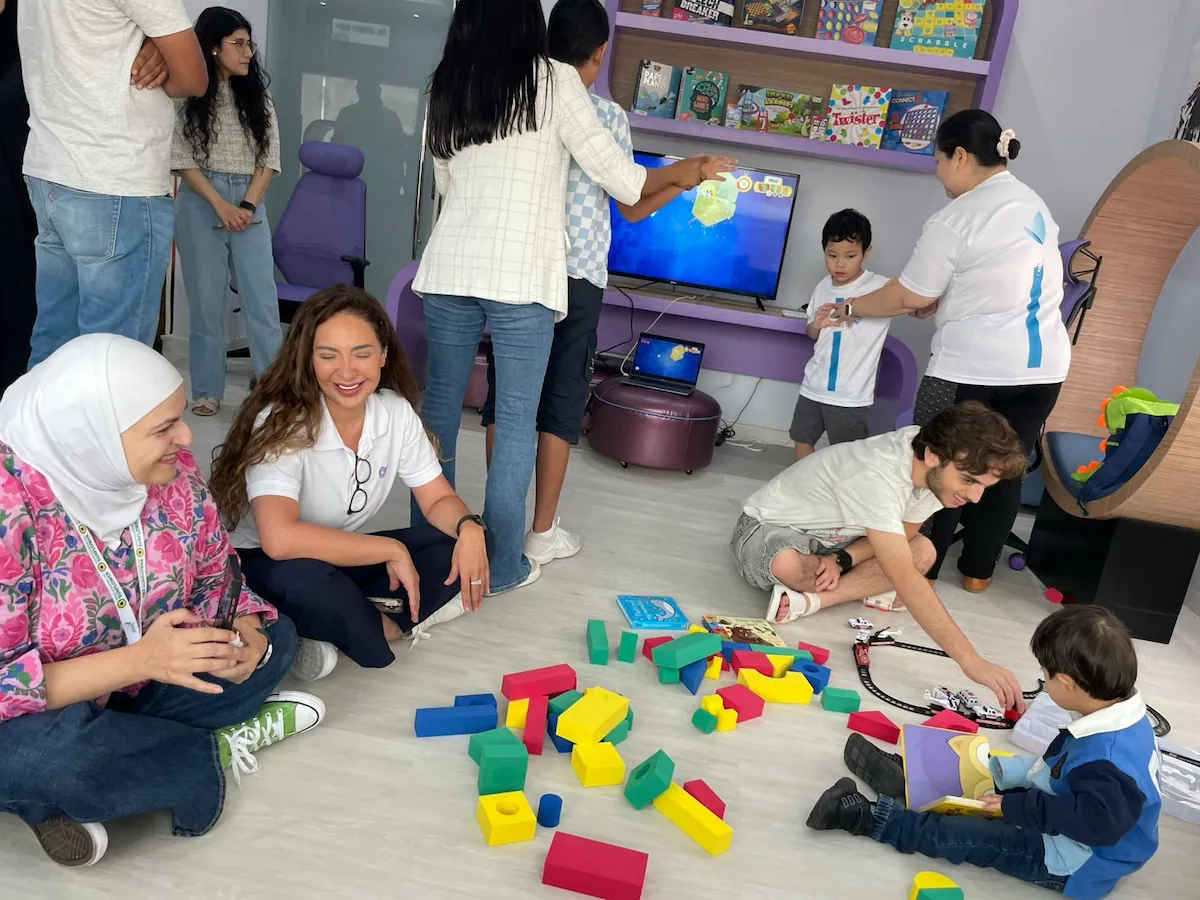
Build Skills Through Play
AR games designed with therapists — for children with ADHD, ASD, DCD, and more. Just a laptop camera. No downloads.
Try Free for 14 DaysHow to Support It Day to Day
Very little of this requires equipment or a plan.
At Home
- Talk with them, not at them. The single strongest lever there is. Ask real questions and leave enough silence for an answer, which usually takes longer than feels comfortable.
- Read together and ask what happens next. Prediction is reasoning practice disguised as a bedtime story.
- Let them try before you step in. The struggle is where the thinking happens. Rescuing too early removes the useful part.
- Sort, count and compare during ordinary tasks. Laundry, shopping, laying the table. More effective than a worksheet and already happening anyway.
- Follow their interest. A child who cares about dinosaurs will absorb classification, vocabulary and scale from dinosaurs faster than from anything you choose for them.
In the Classroom
- Open-ended materials. Blocks, loose parts and sand generate more thinking than single-outcome toys.
- Ask how and why, not what. "What colour is it" has one answer. "How did you work that out" has a conversation in it.
- Build in waiting. Give children a few seconds after a question before accepting the first hand up.
- Sequence tasks aloud. Saying "first we do this, then that" models the planning you want them to internalise.
Games That Help
Games work here because the difficulty adjusts and the feedback is immediate, which is the combination that keeps a child in the zone where they are stretched but not defeated. Memory, matching and pattern games all target the areas above directly.
Games That Build Thinking Skills
One for memory and attention, one for shape and colour recognition. Both adjust as a child improves, which is what keeps them useful.


A Note on Brain Development
Cognitive development and brain development are related but not identical. Brain development is the physical process: connections forming, strengthening with use, and being pruned away when unused. Cognitive development is what that physical process makes possible.
The practical implication is the same either way. Connections strengthen through repetition and use, which is why frequent ordinary interaction does more than occasional enrichment.
When to Look More Closely
Variation is normal and wide. It is worth raising with a paediatrician if a child:
- Loses a skill they previously had
- Is noticeably behind across several areas at once rather than one
- Shows very little interest in exploring or in other people
- Is not using language in the way you would expect for their age
Early assessment is inexpensive and frequently reassuring. Waiting to see rarely improves the outcome and often costs time that would have been useful.
This article is general information about child development. It is not a diagnostic tool and does not replace advice from a clinician who has assessed your child.
See It In Action
Book a free demo and see how WonderTree works for your child, classroom, or therapy center.
Book a Free Demo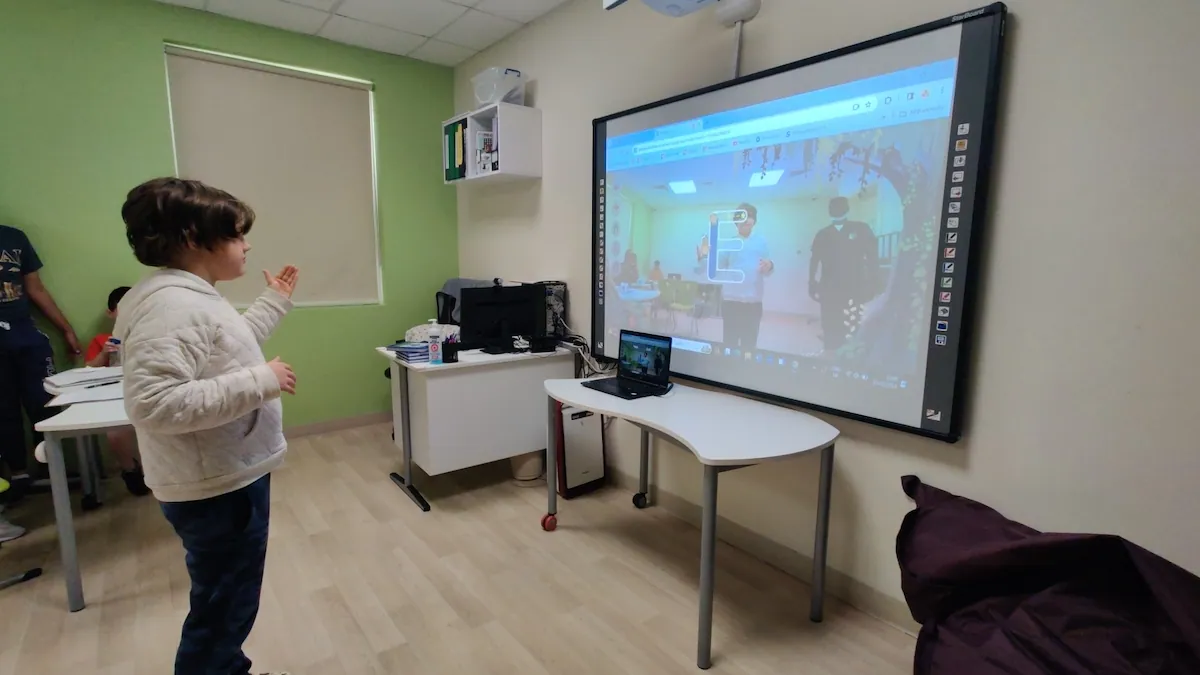
Frequently Asked Questions
What is cognitive development in early childhood?
It is how young children learn to think, remember, concentrate, use language and work things out. It covers memory, attention, language, problem-solving and understanding concepts like size, number and time. Most of it develops through everyday interaction rather than formal teaching.
What are examples of cognitive development?
A baby tracking a toy across their field of vision. A toddler pressing a button to see what happens. A three-year-old copying a circle after watching an adult draw one. A four-year-old saying what comes next in a familiar story. A five-year-old using words like yesterday and tomorrow correctly.
What are Piaget's stages of cognitive development?
Sensorimotor from birth to two, learning through senses and movement. Preoperational from two to seven, when imagination and language develop but thinking stays concrete. Concrete operational from seven to eleven, when logic about real situations appears. Formal operational from twelve, when abstract reasoning develops.
What cognitive milestones should a 3 to 5 year old reach?
By three, many children copy a circle and show everyday caution such as avoiding something hot after a warning. By four, they name some colours, say what happens next in a familiar story, and draw a person with three or more parts. By five, many count to ten, use time words, and concentrate for five to ten minutes.
How can I support my child's cognitive development at home?
Talk with them rather than at them, and leave space for answers. Read together and ask what might happen next. Let them attempt things before stepping in. Sort, count and compare during ordinary tasks like laundry or shopping. Conversation and unhurried problem-solving matter more than any specific toy.
When should I be concerned about cognitive development?
Milestones describe what most children do by a given age, so being a little behind on one is common. Worth raising with a paediatrician: losing a skill the child previously had, being noticeably behind across several areas at once, or a persistent instinct that something is different. Early assessment is low-cost and often reassuring.
Was this article helpful?
Written by

Last medically reviewed on September 9, 2026
How we reviewed this article:
- (2024). CDC's Developmental Milestones — Learn the Signs. Act Early. Centers for Disease Control and Prevention. https://www.cdc.gov/ncbddd/actearly/milestones/index.html
- (1952). The Origins of Intelligence in Children International Universities Press.
- (2024). Executive Function and Self-Regulation Harvard University. https://developingchild.harvard.edu/science/key-concepts/executive-function/
- (2022). Developmentally Appropriate Practice in Early Childhood Programs Serving Children from Birth Through Age 8 (4th ed.) NAEYC. https://www.naeyc.org/resources/position-statements/dap
September 9, 2026
Consolidated from nine overlapping WordPress articles into one guide. CDC milestones and Piaget cited directly.
November 6, 2025