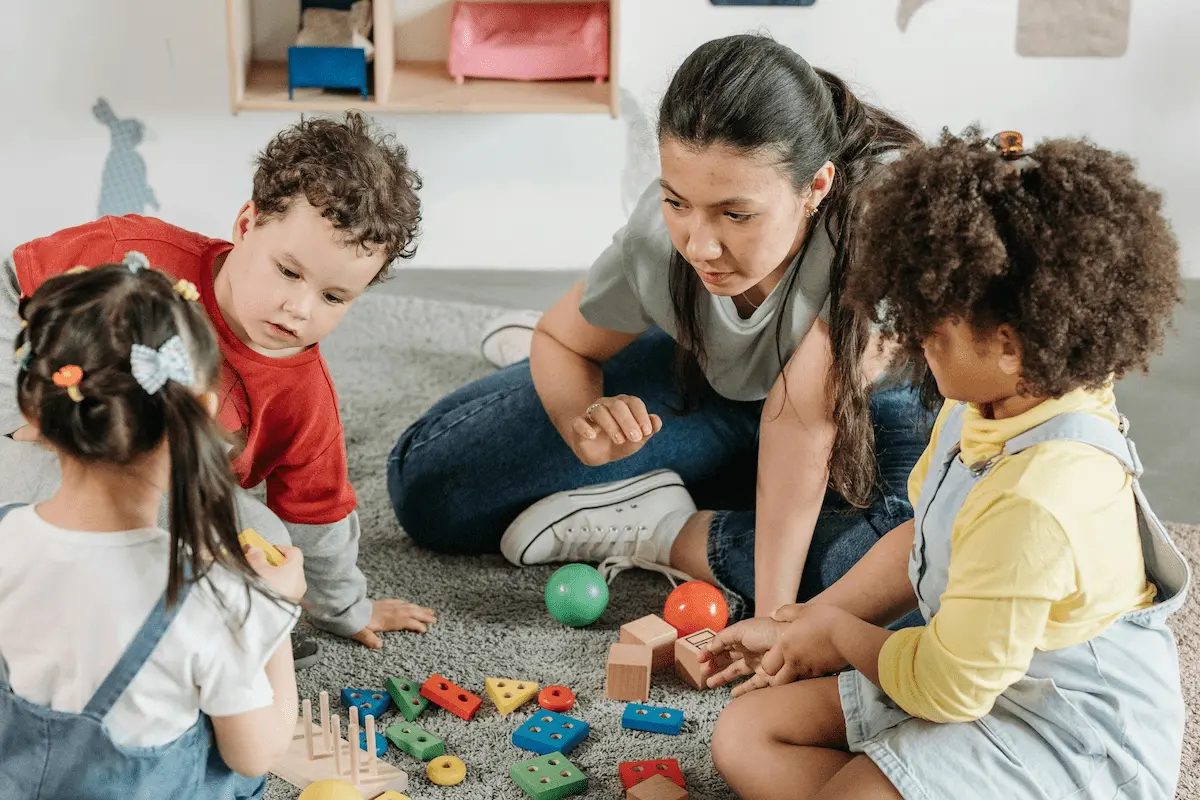
If the day seems to get eaten by transitions, arrival then tidy-up then bathroom then regroup then a meltdown, nothing has gone wrong. Preschoolers are still working out what comes next, how long things last, and how to move between them.
That is what a routine is for. Head Start's guidance is direct about it: consistent schedules and routines give children a predictable day, which is what allows them to feel secure enough to engage with anything else.
Below are copy-ready schedules for two-year-olds, three-year-olds and preschool at home, plus the transition tips that decide whether any of it survives a real Tuesday.
What a Good Preschool Day Includes
The building blocks are much the same across settings. What changes is the length of each block and how many transitions sit between them.
- Arrival and welcome. A predictable start with a choice in it.
- Free choice or learning centres. Self-directed play, which is where most of the learning happens.
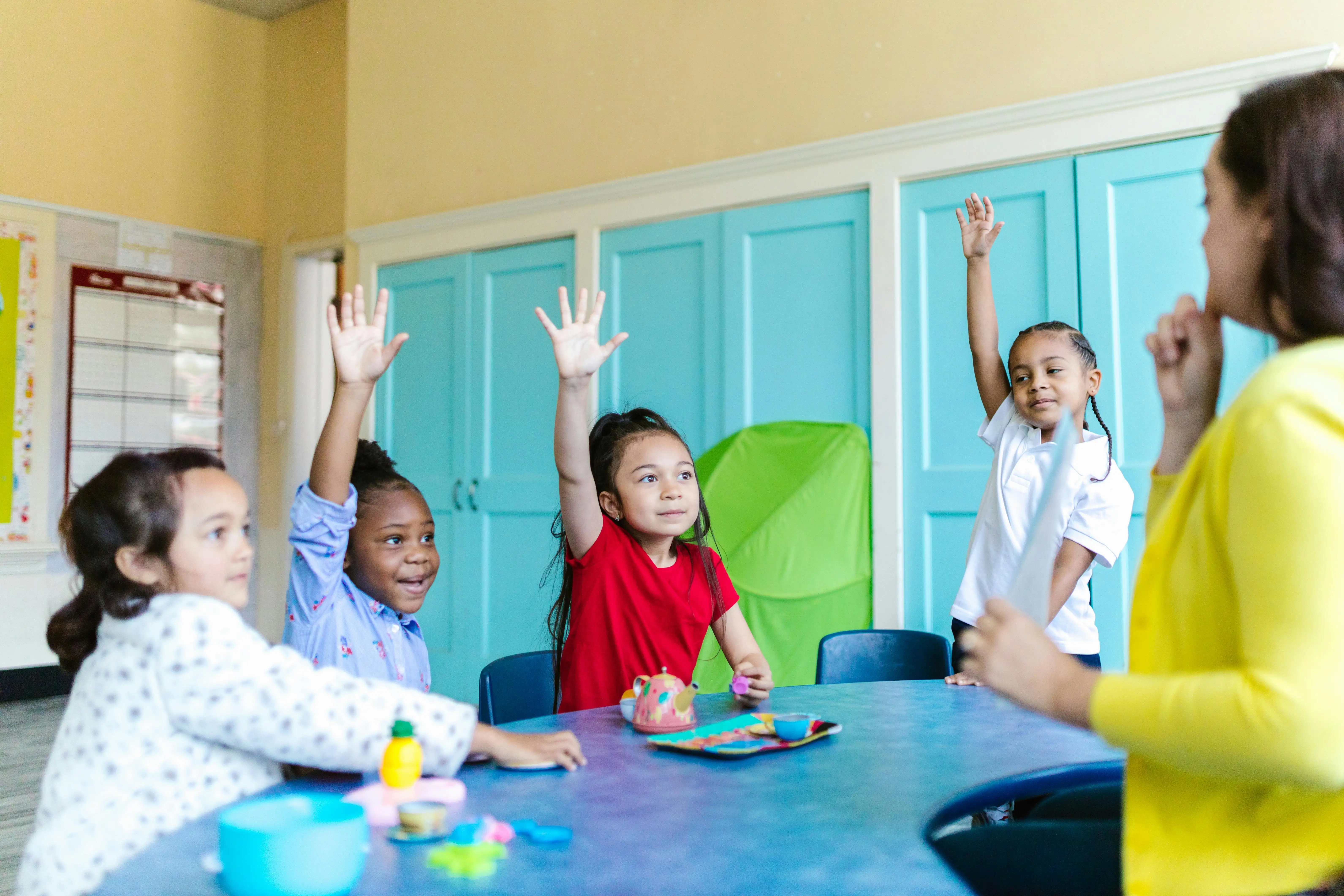
- Circle time. Short and interactive rather than long and listened-to.
- Small group. Targeted work on language, early maths or fine motor skills.
- Gross motor. Outdoors when possible, indoors when not. Not optional and not a reward.
- Meals, snack and hygiene. Genuine independence practice, not dead time.
- Rest or quiet time. A nap for some, calm activities for the rest.
- Story and closing routine. A clear ending so leaving is not abrupt.
Keep the order consistent and the timing flexible. Children track sequence far more reliably than clocks, so a day that always happens in the same order can absorb a late lunch without falling apart.
Build Skills Through Play
AR games designed with therapists — for children with ADHD, ASD, DCD, and more. Just a laptop camera. No downloads.
Try Free for 14 DaysSample Daily Schedules
Daily Schedule for 2 Year Olds
Two-year-olds need very predictable rhythms, short blocks and few transitions. The goal is not academic content. It is feeling secure, communicating needs, and practising independence in small steps.
- 8:00 Arrival, hello routine, free play
- 8:30 Snack and handwashing
- 8:45 Free play and centres, adults circulating and modelling language
- 9:15 Mini circle: songs, names, one page of a picture book
- 9:25 Outdoor play, or indoor gross motor
- 10:05 Bathroom, transition song, water
- 10:20 Sensory play and simple art, process rather than product
- 10:50 Story and calming routine
- 11:10 Lunch
- 11:45 Nap or quiet rest
- 2:00 Wake-up routine and bathroom
- 2:20 Snack
- 2:35 Centres: fine-motor bins, blocks, dramatic play
- 3:10 Movement and music
- 3:30 Goodbye routine
Adult-led blocks at this age should run five to fifteen minutes. Anything longer is optimistic.
Daily Preschool Schedule for 3 Year Olds
Three-year-olds can manage longer blocks, more choice and a real small-group slot. The shape of the day is similar; the stretches are longer and there is more room for child-led work.
- 8:00 Arrival, self-registration, table-top choices
- 8:30 Circle time: calendar, weather, song, one shared question
- 8:50 Learning centres, free choice
- 9:30 Small group: literacy or maths focus, ten to fifteen minutes
- 9:50 Snack and independence practice
- 10:10 Outdoor play or indoor gross motor
- 11:00 Story and discussion
- 11:20 Lunch
- 12:00 Rest or quiet activities
- 1:30 Creative work: art, construction, sensory
- 2:15 Music and movement
- 2:45 Free choice
- 3:15 Tidy-up, reflection, goodbye routine
Preschool Schedule at Home
At home the aim is not to replicate a nursery timetable. It is to give the day a shape the child can predict.
- Morning: wake and breakfast routine, then active play while energy is highest
- Mid-morning: one focused activity, fifteen minutes is plenty
- Late morning: outdoors, or indoor movement if not
- Lunch, then rest or quiet time
- Afternoon: free play, then something creative
- Late afternoon: tidy-up together, then wind-down
Filling the Indoor Movement Slot
The gross-motor block is the one that gets dropped when the weather turns, and it is the one children most need. Motion-controlled games fill it without setup or space, which makes them easier to actually use on the days you are least likely to bother.
Filling the Movement Slot
For the indoor gross-motor block on days when outdoor play is not happening. Short rounds fit the slot without needing setup.


Transitions Are the Hard Part
Most difficult days are transition problems rather than activity problems. A few things reliably help:
- Warn before the change. Two minutes, then one. Arriving without notice is what causes the resistance.
- Use the same cue every time. A song, a countdown, a bell. Consistency is what makes it work, not the cue itself.
- Give the transition a job. Marching to the carpet, carrying something, moving like an animal.
- Cut a transition if you can. The easiest transition to manage is one that no longer exists.
If the day feels chaotic, change one thing. Pick a single anchor, the same snack routine or the same tidy-up song, and repeat it daily before touching anything else. Rebuilding the whole schedule at once removes the predictability you are trying to create.
See It In Action
Book a free demo and see how WonderTree works for your child, classroom, or therapy center.
Book a Free Demo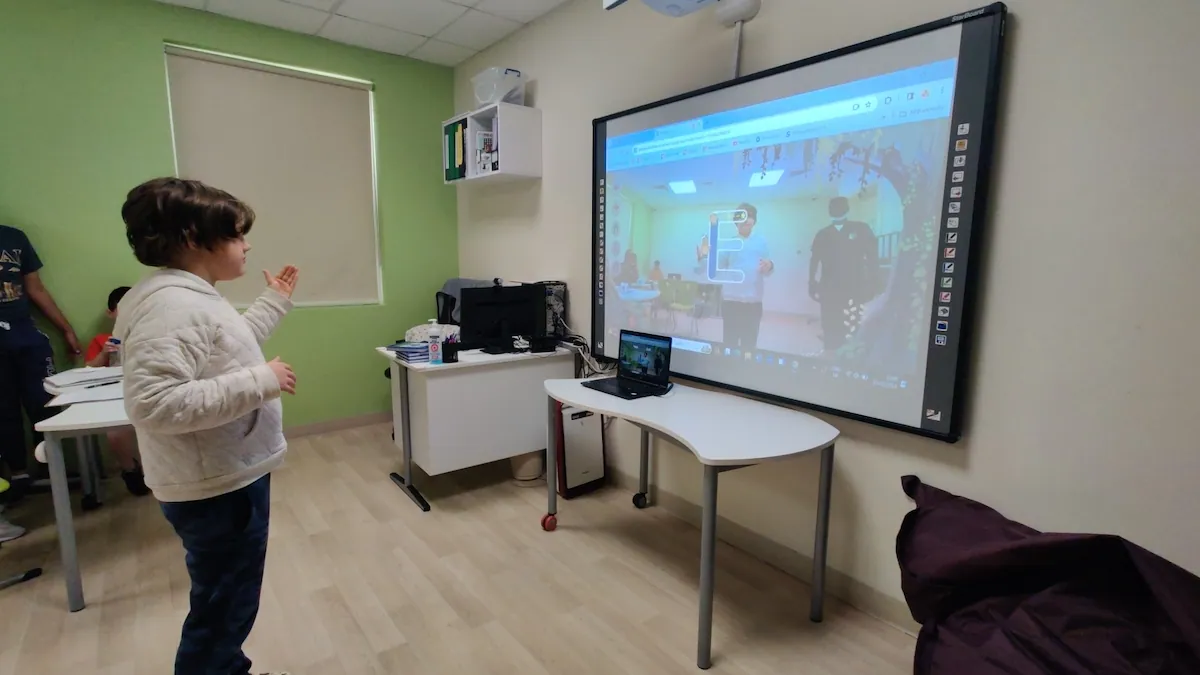
Frequently Asked Questions
What should a daily schedule for a 2 year old look like?
Short blocks of five to fifteen minutes for anything adult-led, plenty of movement and sensory play, and as few transitions as you can manage. At two the priority is feeling secure and practising independence in small steps, not academic content.
What is a good daily schedule for a 3 year old in preschool?
Longer blocks than at two, typically fifteen to twenty-five minutes, with more free choice and a genuine small-group slot. Three-year-olds can handle a fuller circle time and more structured play, but still need outdoor or indoor gross-motor time built in rather than treated as a reward.
How do I set up a preschool schedule at home?
Keep the order the same every day and let the timing flex. A predictable sequence of wake, breakfast, active play, focused activity, lunch, rest, free play, tidy-up and wind-down does more than matching a nursery timetable minute for minute.
How long should preschool activities last?
Roughly five to fifteen minutes at age two and fifteen to twenty-five at age three for adult-led activities. Free play can run much longer. Ending an activity while children are still engaged is better than pushing until they lose interest.
What do I do when the schedule keeps falling apart?
Look at the transitions rather than the activities. Most difficult days are caused by the moves between things, not the things themselves. Pick one transition, give it a consistent cue such as the same song or countdown, and use it every day before changing anything else.
Should a preschool schedule include rest time?
Yes, though it does not have to be a nap. Children who no longer sleep still benefit from a quiet period with books or calm activities. Removing it entirely usually shows up as difficulty later in the afternoon.
Was this article helpful?
Written by

Last medically reviewed on September 9, 2026
How we reviewed this article:
- (2024). The Importance of Schedules and Routines HeadStart.gov. https://headstart.gov/about-us/article/importance-schedules-routines
- (2024). Essentials for Parenting Toddlers and Preschoolers: Creating Structure and Rules Centers for Disease Control and Prevention. https://www.cdc.gov/parents/essentials/structure/index.html
- (2022). Developmentally Appropriate Practice in Early Childhood Programs Serving Children from Birth Through Age 8 (4th ed.) NAEYC. https://www.naeyc.org/resources/position-statements/dap
- (2024). Bright Futures Guidelines for Health Supervision of Infants, Children, and Adolescents, 4th Edition American Academy of Pediatrics. https://publications.aap.org/brightfutures
September 9, 2026
Migrated from WordPress. Schedules consolidated into one section, FAQ added, Head Start and CDC guidance cited directly.
January 15, 2026