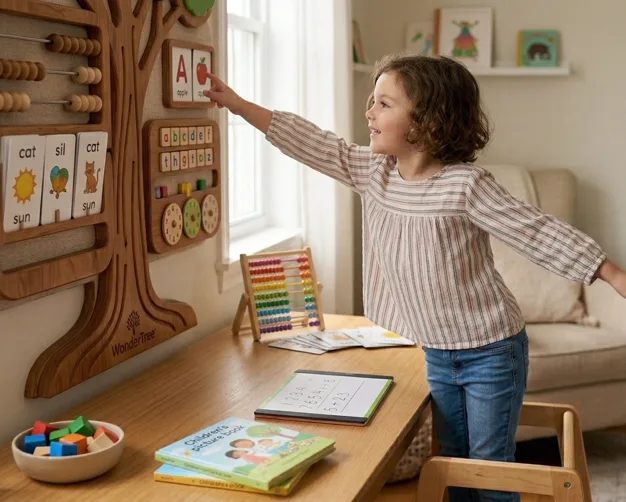
A seven-year-old can tell when a game is pretending to be fun.
Too easy, too repetitive, or too obviously schoolwork with a cartoon on top, and they are gone within minutes. Give them something that feels like a challenge they could get better at, and they will stay with it far longer than you expected.
That gap is what this is about: what changes at seven, and how to tell in two minutes whether a game is worth the time.
Why Seven Is Different
Around this age the little-kid phase fades and children start wanting to do things themselves. They want to work something out, understand how it functions, make their own choices, and feel capable.
That changes the job of a learning game. At four, a game introduces a concept. At seven, a good game should help a child use one. The difference between meeting an idea and applying it is most of what makes a game hold up at this age.
What Makes a Game Worthwhile
Three things, and a game needs all of them:
- A real skill underneath. Reading, number sense, memory, logic, coordination. Something you could name if asked.
- Active participation. The child is deciding, not tapping through animations that would play out the same way regardless.
- Visible progress. The child can feel themselves getting better. That feeling is what brings them back tomorrow.
The Two-Minute Test
Watch your child play for two minutes, then ask yourself one question: what decision did they just make?
If you cannot name one, the game is entertainment with an educational label. Research reviewing the evidence behind educational apps found much the same thing: what matters is whether the child is minds-on and actively engaged, not whether the content is labelled as learning.
The second check is whether difficulty adjusts. A fixed level either bores a child or defeats them, and both end the same way.
Build Skills Through Play
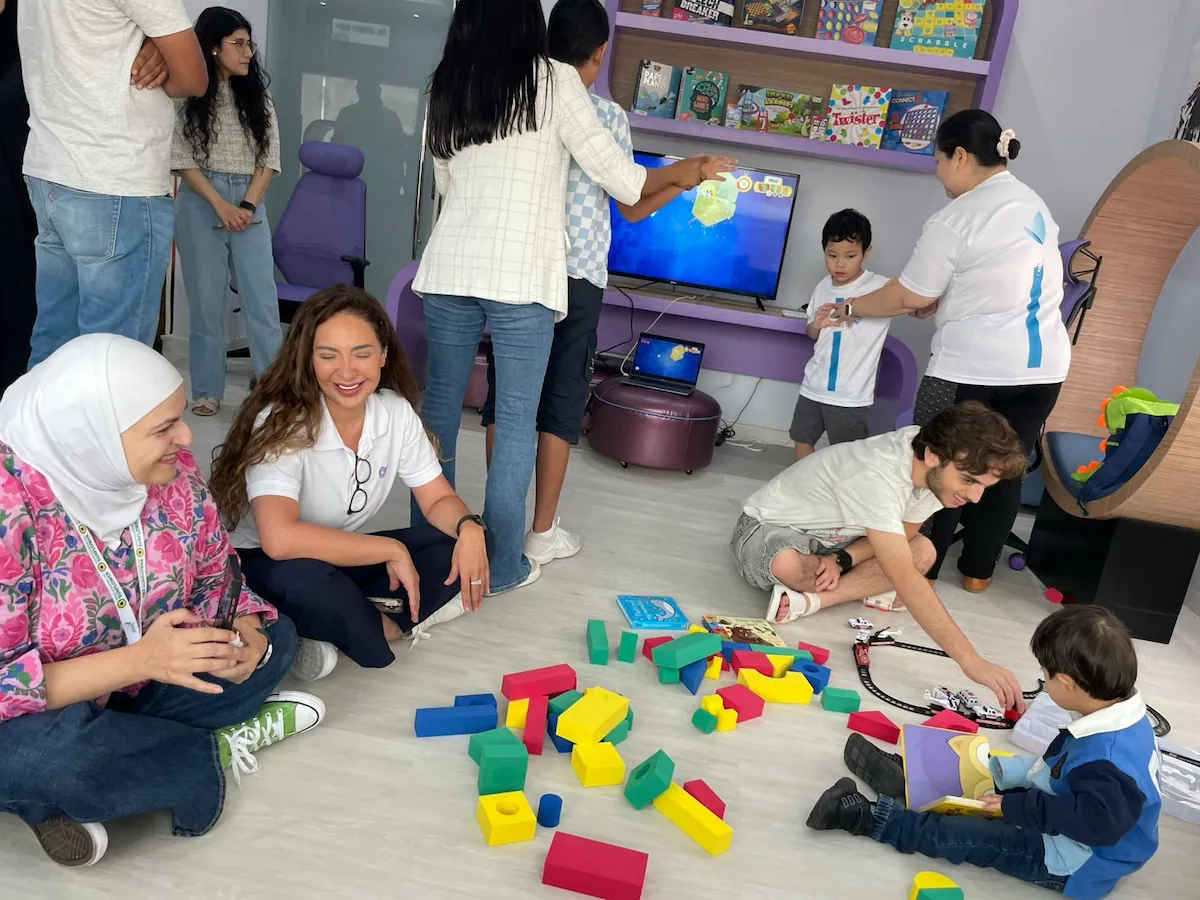
AR games designed with therapists — for children with ADHD, ASD, DCD, and more. Just a laptop camera. No downloads.
Try Free for 14 DaysThe Types That Usually Work
Rather than hunting for one perfect game, it helps to know which categories tend to hold a seven-year-old.
Reading and Word Games
These work when language feels interactive rather than tested. Look for word building, vocabulary matching, story sequencing and comprehension that asks the child to do something with the text.
At seven most children are moving from decoding to fluency, so games that reward speed and recognition suit the moment better than ones that drill individual letters.
Maths and Logic Games
Maths becomes engaging at this age when it feels like solving rather than drilling. Number puzzles, pattern spotting, sequencing and small logic challenges all give the child something to crack.
The good ones make the child choose a strategy. The weak ones just ask for the answer to a sum faster.
Memory and Focus Games
Seven-year-olds are ready for longer tasks but still benefit from playful practice at holding information while acting on it. Memory grids, repeat-the-pattern challenges and matching games all build the working memory that classroom instructions depend on.
This category is quietly one of the most useful, because following a three-step instruction is a memory task before it is a behaviour one.
Movement-Based Games
Worth considering for any child who finds sitting still difficult, and for anyone working on coordination. They also change the nature of screen time: the child is physically active and making decisions rather than watching.
Games That Ask a Seven-Year-Old to Think
One for memory and attention, one for reading. Both run in the browser and adjust as the child improves.


What a Child Is Building at Seven
A good game at this age usually works on several things at once. Underneath the play a child may be practising:
- Reading and following instructions without help
- Spotting patterns and holding steps in mind
- Staying with a task past the first difficulty
- Adjusting after a mistake instead of giving up
- Controlling movement with more precision
- Building confidence through success they can attribute to themselves
That last one carries more weight than it appears to. A child who believes they are capable attempts harder things, and attempting harder things is how the rest of it develops.
A Note on Screen Time
The American Academy of Pediatrics no longer sets a single number of minutes for school-age children. The guidance is to build a family media plan that protects sleep, physical activity and time together, and to pay attention to what the screen is being used for.
Which is the more useful frame anyway. An hour of active problem-solving and an hour of passive video are not the same hour.
See It In Action
Book a free demo and see how WonderTree works for your child, classroom, or therapy center.
Book a Free Demo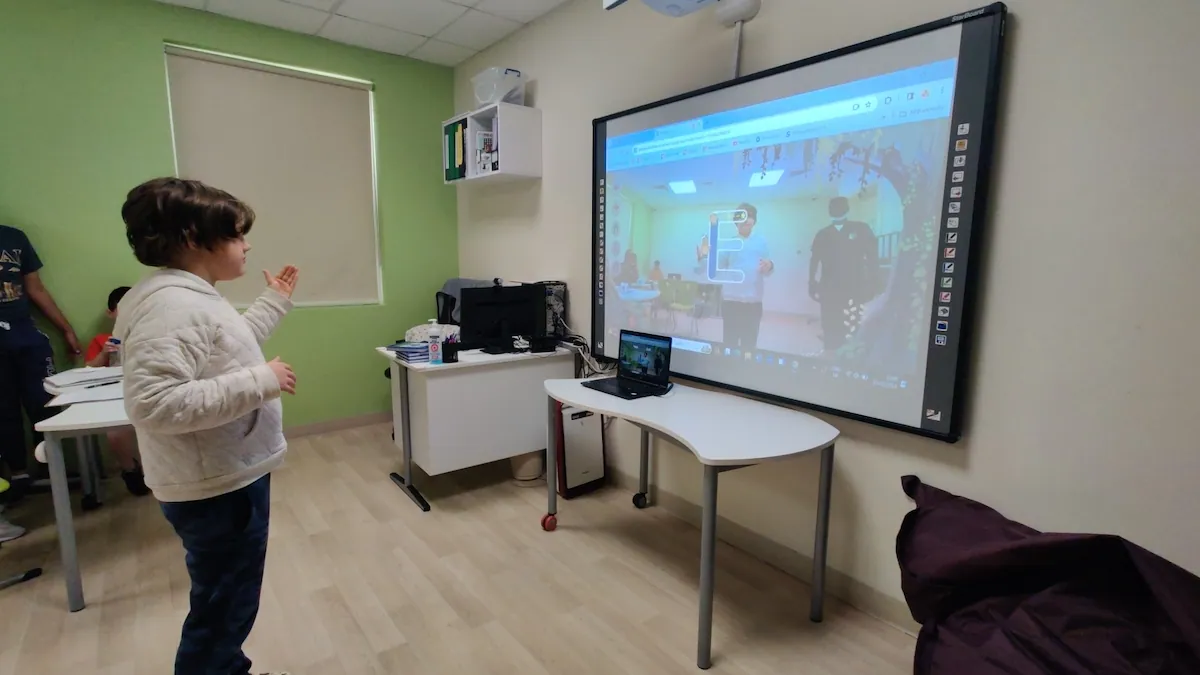
Frequently Asked Questions
What are good educational games for 7 year olds?
The ones that build a specific skill, require real decisions rather than tapping, and let the child feel progress. Reading and word-building games, number and pattern puzzles, memory and sequence games, and movement-based games all qualify. The category matters less than whether the child is actually thinking.
How much screen time is appropriate at seven?
The American Academy of Pediatrics stopped recommending a single number for school-age children and instead suggests a family media plan that protects sleep, physical activity and time together. What the child does on the screen matters more than the total, and an hour of active problem-solving is not equivalent to an hour of passive video.
How do I know if a learning game is any good?
Watch your child play for two minutes and ask what decision they just made. If you cannot identify one, the game is entertainment wearing an educational label. Also check that difficulty adjusts, because a fixed level either bores the child or defeats them.
Do educational games actually help with school?
They can, when the game targets a skill the child is genuinely working on and gives immediate feedback. They work best as extra practice at something already being taught, not as a replacement for teaching. A game will not introduce a concept as well as a person will.
Why does my seven-year-old lose interest so quickly?
Usually because the game is too easy, too repetitive, or too obviously schoolwork in disguise. Seven-year-olds want to feel capable and to make their own choices, so a game that gives no real agency gets abandoned quickly however colourful it is.
Are movement-based games useful at this age?
Yes, particularly for children who find sitting still difficult or who are working on coordination. They also make screen time active rather than passive, which is the more useful distinction than simply counting the minutes.
Was this article helpful?
Written by

Last medically reviewed on September 9, 2026
How we reviewed this article:
- (2024). Family Media Plan and media use guidance for school-age children American Academy of Pediatrics, HealthyChildren.org. https://www.healthychildren.org/English/fmp/Pages/MediaPlan.aspx
- (2015). Putting education in 'educational' apps: lessons from the science of learning Psychological Science in the Public Interest, 16(1), 3-34. https://pubmed.ncbi.nlm.nih.gov/25985468/
- (2022). Developmentally Appropriate Practice in Early Childhood Programs Serving Children from Birth Through Age 8 (4th ed.) NAEYC. https://www.naeyc.org/resources/position-statements/dap
- (2024). Child Development: Middle Childhood (6-8 years) Centers for Disease Control and Prevention. https://www.cdc.gov/child-development/positive-parenting-tips/middle-childhood-6-8-years.html
September 9, 2026
Migrated from WordPress. Added a practical test for evaluating a game, an FAQ, and developmental sources.
March 8, 2026