Most social skills advice for autistic children is delivered at the wrong moment. A child does something in the playground, an adult explains afterwards what they should have done, and nothing changes because the explanation arrived when the situation was already over.
The thing that works is rehearsal before, not correction after. Everything below is a version of that.
What Is Actually Difficult
Autistic children often find some combination of these harder than their peers:
- Reading tone of voice or facial expression quickly enough to respond in time
- Knowing how to enter a group that is already playing
- Taking turns in conversation, which has rules nobody states
- Handling a group, where several things happen at once
These are differences in how social information is processed, not failures of effort or of wanting to belong. That distinction matters practically as well as ethically: a child who is trying hard and failing needs a different response from one who is not trying.
It also shapes what the goal should be. The aim is not eye contact or appearing typical. It is being able to get what you need out of an interaction, and to be understood.
Build Skills Through Play
AR games designed with therapists — for children with ADHD, ASD, DCD, and more. Just a laptop camera. No downloads.
Try Free for 14 DaysActivities That Help
Role Play of Real Situations
Pick situations that actually happen: asking to join a game, someone taking a turn out of order, being told no, greeting someone at the door.
Act them out with puppets, figures, or each other, then swap roles so the child practises both sides. Repeat the same scenario across several days rather than covering a new one each time. Familiarity is the point.
Give Them the Actual Words
This is the highest-value and most overlooked item on the list. Teach specific phrases and rehearse them out loud while everything is calm:
- "Can I play too?"
- "My turn next."
- "Stop, please."
- "I need help."
- "I need a minute."
A child cannot reach for language they have never said aloud. Five phrases practised properly are worth more than a general conversation about being friendly.
Visual Supports and Social Stories
A social story is a short, personalised description of one situation and what usually happens in it. They work because they make an invisible rule concrete, and because the child can reread them as often as they want without anyone repeating themselves.
Step-by-step visual guides do the same job for sequences: how to start a conversation, what to do when someone says hello.
Cooperative Tasks With a Shared Goal
Building something together, a board game with clear turns, a shared drawing. A concrete shared objective takes the pressure off the social part, because the interaction is in service of the task rather than being the task.
Keep groups small. Two children is a manageable social situation; six is a crowd.
Structured Games
For children who find practising with a person difficult, a game removes the audience. Emotional recognition and turn-taking can be rehearsed in private, repeated as often as the child wants, with no one watching them get it wrong.
That is not a replacement for practising with people. It is a way in for children who will not attempt it with people yet.
Rehearsing Without an Audience
Emotional recognition and turn-taking practised in private, which for many children is the difference between trying and not.

What the Evidence Says
A meta-analysis of group social skills interventions for autistic young people found modest but genuine gains. Two details from it are worth knowing:
- Gains were strongest for children who already use language. Non-speaking children need different approaches.
- Transfer works better when practice happens where the skill is needed. Skills learned in a clinic room do not automatically appear in a playground, which is an argument for rehearsing at home and at school rather than only in sessions.
Expect slow, uneven progress. A child may use a phrase reliably at home for weeks before it appears anywhere else.
What to Skip
- Forcing eye contact. Many autistic people find it uncomfortable or actively distracting. Facing the speaker does the same social job.
- Correcting in the moment. A child mid-difficulty cannot absorb instruction. Address it later, or better, rehearse it beforehand.
- Treating solitary play as a problem. Wanting to be alone is a preference, not a symptom. Support the child who wants to join in and does not know how.
- Covering too many situations. Five well-rehearsed scenarios beat twenty mentioned once.
This is general guidance rather than clinical advice. A speech and language therapist or psychologist who knows your child can be far more specific.
See It In Action
Book a free demo and see how WonderTree works for your child, classroom, or therapy center.
Book a Free Demo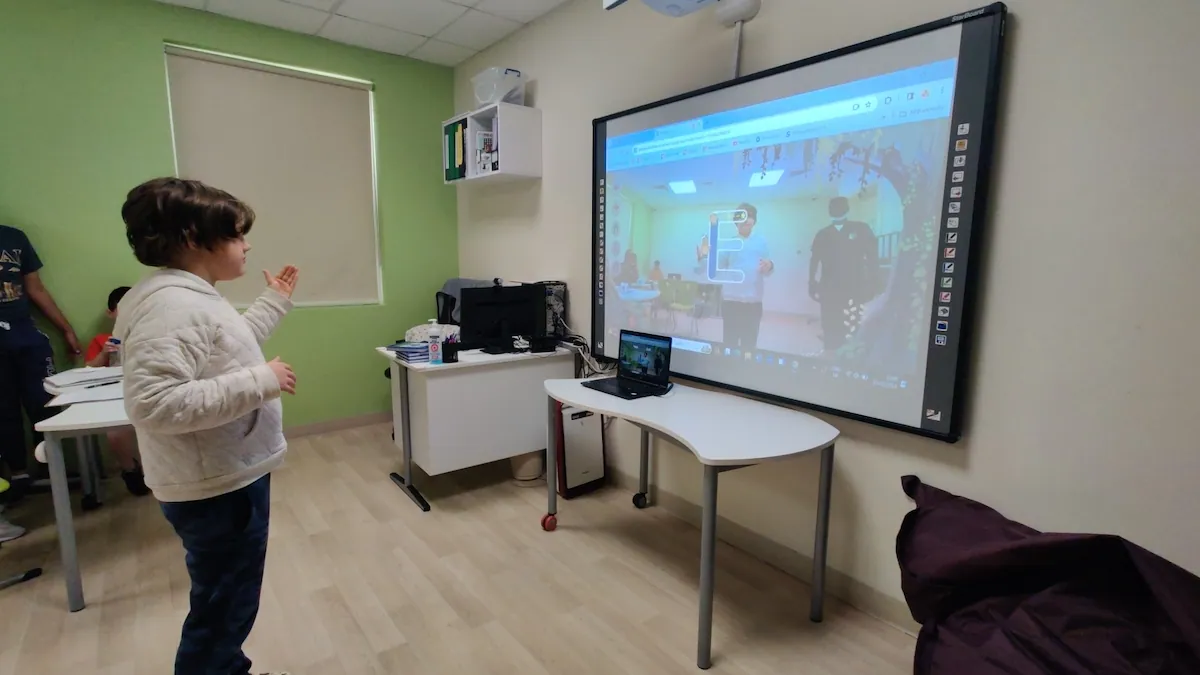
Frequently Asked Questions
What are good social skills activities for autistic children?
Role play of real situations, cooperative tasks with a clear shared goal, visual supports and social stories, and structured turn-taking games. The common feature is that they rehearse a situation in a low-pressure setting before the child has to handle it for real.
Do social skills programmes actually work?
A meta-analysis of group social skills interventions for autistic young people found modest but genuine gains, strongest for children who already use language and where skills were practised in realistic settings. Gains transfer better when practice happens in the environment where the skill is needed rather than only in a clinic room.
Should I teach my autistic child to make eye contact?
Many autistic people describe eye contact as uncomfortable or actively distracting, and forcing it can make listening harder rather than easier. The more useful goal is showing you are listening in a way that works for the child. Facing the speaker or nodding does the same social job without the discomfort.
What is a social story and does it help?
A short, personalised description of a specific situation and what usually happens in it. They help because they make an invisible rule explicit and can be reread as many times as needed, which is often what a child needs rather than more explanation in the moment.
My child prefers to play alone. Is that a problem?
Not by itself. Solitary play is not a deficit and plenty of autistic children genuinely prefer it. The thing worth supporting is having the option: a child who wants to join in but does not know how needs help, while a child who is content alone mostly needs that respected.
How long before I see progress?
Slowly, and unevenly. Social skills are built through many repetitions across different situations, so a child may use a phrase perfectly at home for weeks before it appears at school. Practising the same handful of situations consistently works better than covering many.
Was this article helpful?
Written by

Last medically reviewed on September 9, 2026
How we reviewed this article:
- (2017). Efficacy of group social skills interventions for youth with autism spectrum disorder: a systematic review and meta-analysis Clinical Psychology Review, 52, 164-181. https://pubmed.ncbi.nlm.nih.gov/28130983/
- (2020). Autism spectrum disorder Nature Reviews Disease Primers, 6(1), 5. https://pubmed.ncbi.nlm.nih.gov/31949163/
- (2024). Signs and Symptoms of Autism Spectrum Disorder Centers for Disease Control and Prevention. https://www.cdc.gov/autism/signs-symptoms/index.html
- (2024). Bright Futures Guidelines for Health Supervision of Infants, Children, and Adolescents, 4th Edition American Academy of Pediatrics. https://publications.aap.org/brightfutures
September 9, 2026
Migrated from WordPress. Added evidence on group social skills interventions and reframed deficit language.
June 18, 2025