Most articles about games for autistic children skip the question that actually matters, which is not which game to pick but what makes any of them work.
The answer is unglamorous. A game helps if the child comes back to it. Willing repetition is the mechanism. A brilliantly designed game played twice does less than an ordinary one played thirty times, and everything below follows from that.
Do Games Actually Help?
Within limits, yes, and it is worth being precise about which limits.
What a game does well is provide repetition without social pressure. For a child who finds being watched difficult, or who disengages when an adult starts coaching, a game removes the audience. The child can fail privately and try again, as many times as they want, with no one making a face about it.
What a game cannot do is replace therapy, teaching or human interaction. Research on educational apps is consistent that content labelled as learning is not the same as learning, and the difference is whether the child is genuinely thinking and choosing rather than tapping through something that would happen anyway.
Treat games as practice between the things that matter, not as a substitute for them.
Build Skills Through Play
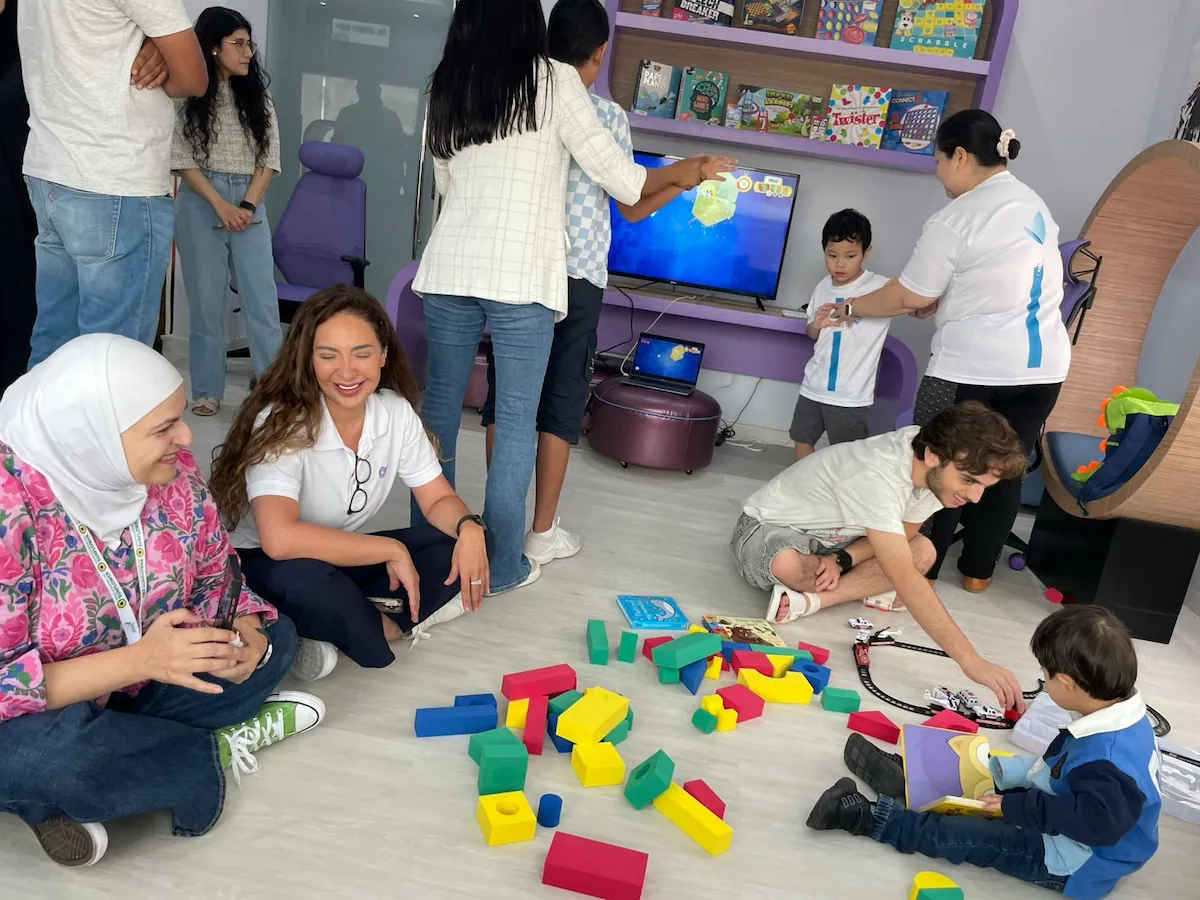
AR games designed with therapists — for children with ADHD, ASD, DCD, and more. Just a laptop camera. No downloads.
Play 2 Games FreeWhat to Look For in a Game
Five things separate a game an autistic child will use from one that gets abandoned in the first minute.
- Predictable rules. The same input produces the same result, every time. Unpredictability is the fastest route to a child leaving.
- No time pressure. A countdown converts a game into a test. Some children thrive on it and many find it unbearable.
- No punishing failure. Losing should be quiet. Loud buzzers and cartoon disappointment read as being told off.
- Sound that can be turned down. For a sound-sensitive child this single setting decides whether the game is usable at all.
- Adjustable difficulty. Always too hard and the child gives up; always too easy and they get bored. The useful zone is narrow and moves.
Why Camera-Based Games Suit Younger Children
A controller is an obstacle before the game has even started. The child has to learn a mapping between button and outcome, which for a preschooler or a child with motor difficulties can be most of the challenge.
Camera-based games remove that layer. The child moves and the game responds, so there is nothing to learn before playing. It also makes screen time physically active, which changes the calculation about how much of it is reasonable.
Games Worth Starting With
Two that cover different ground: one for recognising and naming emotions, one for movement, tracking and focus.
Games Built for Autistic Children
One for emotional recognition, one for movement and focus. Both free to try, and both playable without a controller.


What These Games Build
- Emotional recognition. Matching expressions to feelings, repeatedly, without anyone asking the child to perform an emotion.
- Attention and focus. Staying with a task past the first difficulty, which transfers more readily than most people expect.
- Motor coordination. Reaching, tracking a moving target, timing a movement.
- Following instructions. Holding a rule in mind while acting on it, which is a memory task before it is a compliance one.
- Self-regulation. Losing a round and choosing to try again is a genuine emotional skill, practised in low stakes.
Introducing a New Game Without a Meltdown
Most first attempts fail for reasons that have nothing to do with the game.
- Let them watch first. Play it yourself while the child observes, with no expectation that they join. Some children need to see something several times before trying it.
- One game at a time. A menu of options is a decision, and decisions are effort.
- Short sessions. Five to ten minutes for preschoolers. Stopping while a child is still enjoying it makes tomorrow easier.
- Same time, same place. Making it part of the routine removes the negotiation about whether it is happening.
- Do not narrate their play. Commentary turns a game back into a lesson, which is the thing you were avoiding.
If a child refuses a game entirely, that is information rather than failure. Try a different one, or try again in a month.
What It Costs and What You Need
A laptop with a webcam is the whole requirement. Two games are free forever, which is worth using to find out whether a particular child engages with this kind of play before committing to anything.
On privacy, which matters more for schools: the camera reads gestures for gameplay, and no video or images are recorded, uploaded or saved. The processing happens on the computer itself.
See It In Action
Book a free demo and see how WonderTree works for your child, classroom, or therapy center.
Book a Free Demo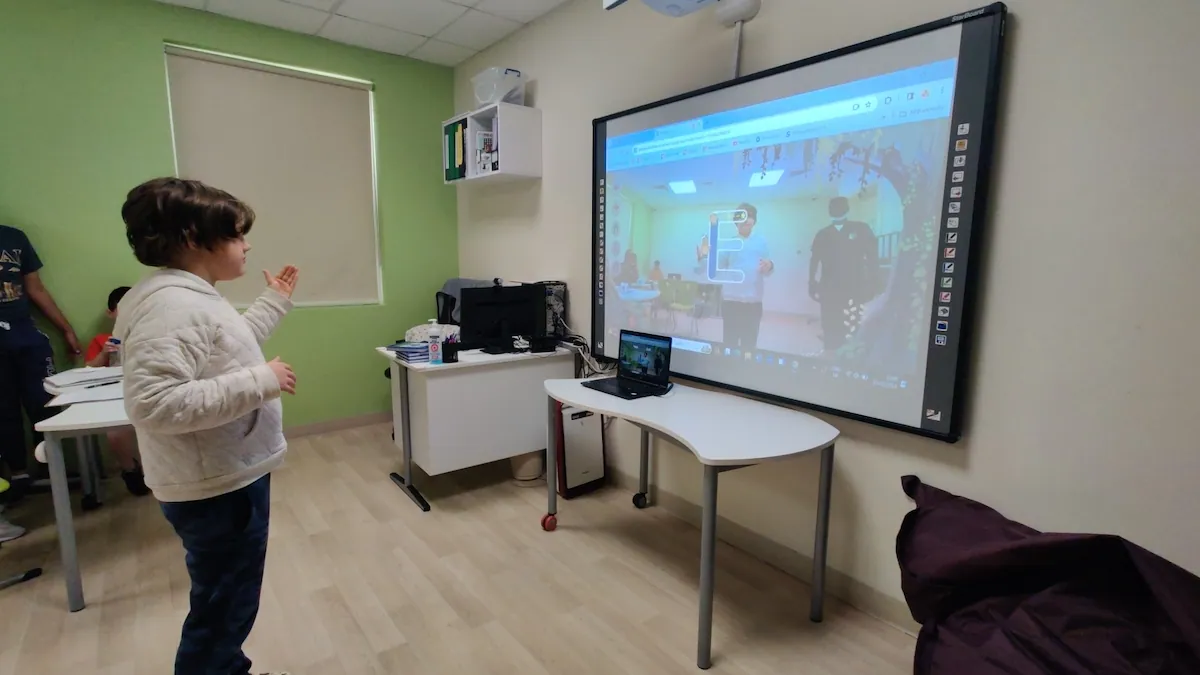
Frequently Asked Questions
Do online games actually help autistic children?
They can, within limits. A game that requires real interaction and gives immediate, predictable feedback gives a child repeated practice at a specific skill. What a game does well is provide repetition without social pressure. What it cannot do is replace therapy, teaching or human interaction.
What should I look for in a game for an autistic child?
Predictable rules that do not change, no time pressure, no punishing failure state, and the option to turn sound down or off. Adjustable difficulty matters too, because a game that is always too hard gets abandoned and one that is always too easy gets boring.
Are these games suitable for preschoolers?
Yes, with short sessions. Five to ten minutes is usually right at that age. Camera-based games suit preschoolers particularly well because there is no controller to learn, so the child can start playing immediately rather than fighting an interface.
How do I introduce a new game without a meltdown?
Let the child watch first, with no expectation that they join in. Play it yourself while they observe. Many first attempts fail not because of the game but because the child was asked to perform something unfamiliar in front of someone straight away.
How much screen time is appropriate?
The American Academy of Pediatrics recommends a family media plan rather than a fixed number of minutes for children over five. The more useful distinction is active versus passive: a child moving and making decisions is in a different situation from a child watching video.
Are the games free?
Two games are free forever, and no specialist hardware is needed beyond a laptop with a webcam. That matters for trying whether a particular child engages with this kind of play at all before committing to anything.
Was this article helpful?
Written by

Last medically reviewed on September 9, 2026
How we reviewed this article:
- (2020). Autism spectrum disorder Nature Reviews Disease Primers, 6(1), 5. https://pubmed.ncbi.nlm.nih.gov/31949163/
- (2024). Signs and Symptoms of Autism Spectrum Disorder Centers for Disease Control and Prevention. https://www.cdc.gov/autism/signs-symptoms/index.html
- (2024). Family Media Plan and media use guidance for school-age children American Academy of Pediatrics, HealthyChildren.org. https://www.healthychildren.org/English/fmp/Pages/MediaPlan.aspx
- (2015). Putting education in 'educational' apps: lessons from the science of learning Psychological Science in the Public Interest, 16(1), 3-34. https://pubmed.ncbi.nlm.nih.gov/25985468/
September 9, 2026
Consolidated from seven overlapping WordPress articles about online games for autistic children.
August 14, 2025