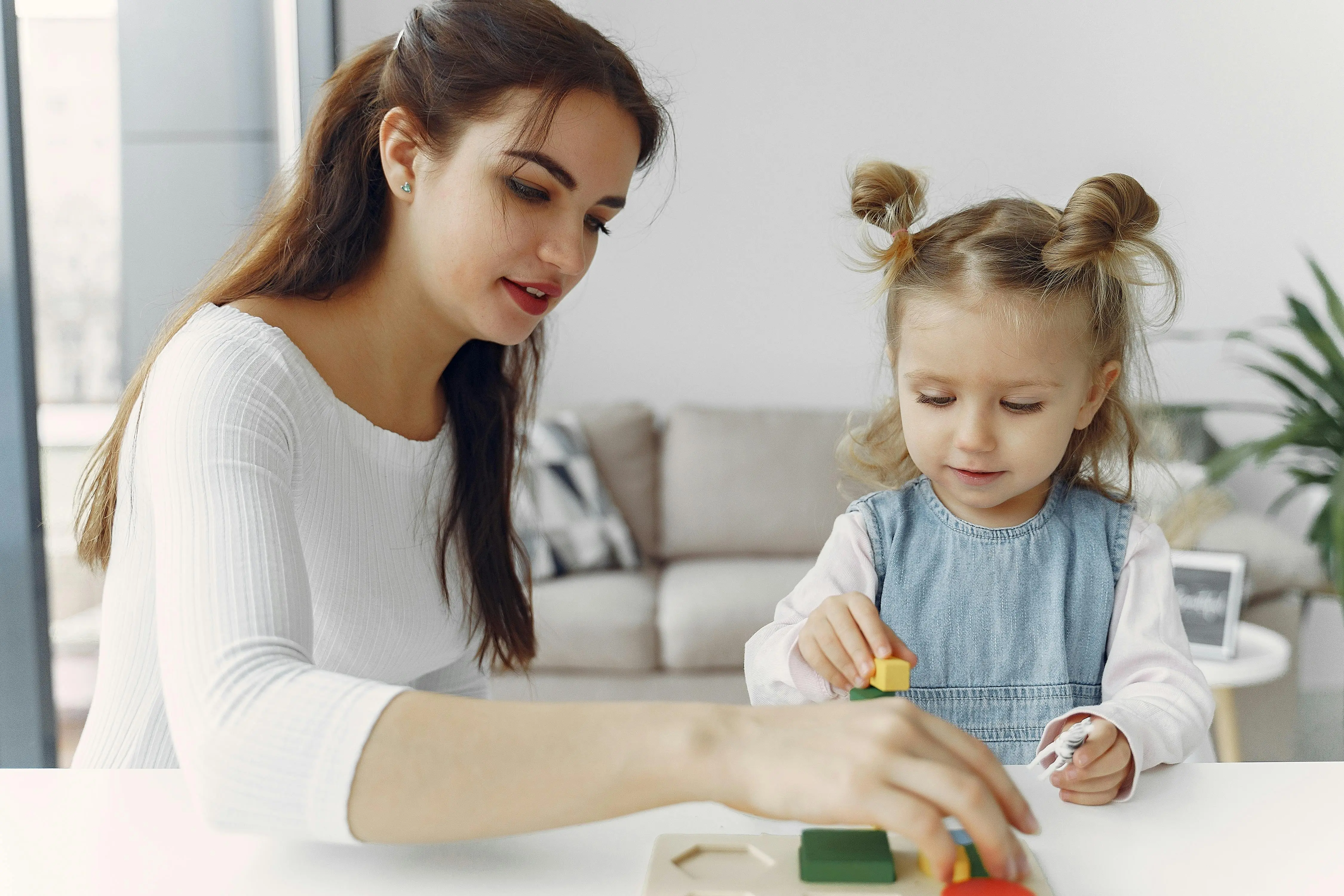
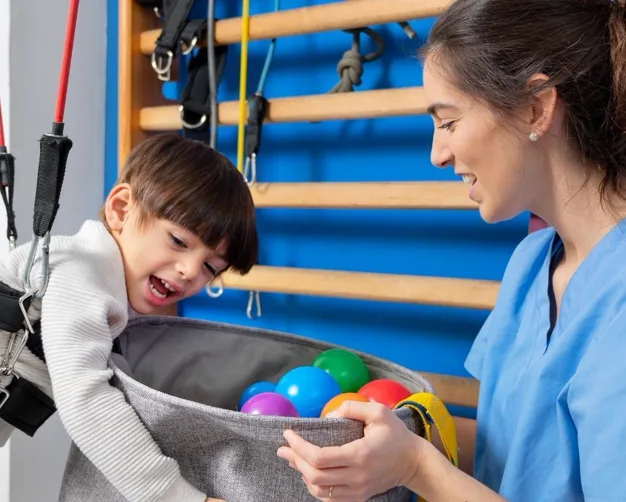
If you are looking for gross motor skills activities for kids, you are probably trying to solve one of a handful of very ordinary problems: a child who avoids movement because they feel clumsy, a child who cannot stay settled through a lesson without a break, a class where transitions turn chaotic, or simply a wet afternoon and a need for something that works indoors.
None of it requires equipment or long sessions. Progress comes from short, repeated movement that feels like play rather than practice.
Below are 21 movement games for kids, grouped by the skill each one builds, plus a ten-minute daily routine and a note on which online games are worth the screen time.
What Gross Motor Skills Are
Gross motor skills use the large muscles of the core, arms and legs for whole-body movement: reaching, jumping, balancing, running, stopping, and holding an upright posture.
They show up in more of a school day than most people expect:
- Sitting upright through a lesson, which is core strength and postural control
- Moving safely in playground games, which is balance and spatial awareness
- Taking part in PE without tiring first, which is endurance and timing
- Staying regulated, because movement helps many children hold attention
The World Health Organization's guidance on physical activity for young children is built around the same idea: frequent, varied movement through the day matters more than any single structured session.
What Makes a Movement Game Worth Repeating
The activities that build skill are the ones a child comes back to. In practice that means four things:
- A clear goal. The child should know what winning looks like within seconds.
- Built-in repetition that does not feel like repetition.
- Adjustable difficulty, so early attempts succeed and the challenge arrives later.
- Immediate feedback. Hit or miss, in or out, fast enough to correct on the next try.
That is the whole reason movement games work better than movement drills. The practice is hidden inside the play.
Build Skills Through Play
AR games designed with therapists — for children with ADHD, ASD, DCD, and more. Just a laptop camera. No downloads.
Play 2 Games Free21 Gross Motor Skills Activities for Kids
Grouped by what each one builds. Pick one or two a day and repeat the ones that land.
Balance and Posture
- Tape-Line Walk. Heel to toe along a taped line on the floor. Builds balance, controlled movement, focus.
- Balance Statues. Stand on one foot for ten seconds, then swap. Builds postural control, stability.
- Wall Push-Ups. Ten slow reps against a wall or desk. Builds upper body strength, postural support.
- Sit-to-Stand Challenge. Five to ten slow stands from a chair, no hands. Builds core and leg strength.
- Animal Walks. Bear crawl, crab walk, frog jump, penguin waddle. Builds core strength, shoulder stability, coordination.
Coordination and Timing
- Balloon Keep-Up. Keep a balloon off the floor, hands only. Builds tracking, response time.
- Target Toss. Rolled socks into a laundry basket. Step back to level up. Builds timing, whole-body coordination.
- Mirror Moves. A leader makes slow arm movements, the others copy exactly. Builds attention, motor planning.
- Jump Patterns. Call out sequences: jump-jump-stop, jump-side-jump. Builds coordination, sequencing.
- Scarf Toss and Catch. Scarves fall slowly, which makes this the gentlest entry point on the list. Builds visual tracking, timing.
- March and Clap. March on the spot, clap above the head, then at the knees. Builds midline crossing, rhythm.
- Rhythm Copy. Clap or stomp a pattern for the child to repeat. Builds timing, focus, sequencing.
- Bubble Chase. Real bubbles, popped with the right hand only, then the left, then both. Builds range of motion, coordination.
Start-Stop Control and Attention
- Freeze Dance. Music plays, everyone moves. Music stops, everyone freezes. Builds impulse control, postural control.
- Red Light, Green Light. Move on green, stop on red. Builds start and stop control, listening.
- Reach High, Reach Low. Call directions fast: high, low, left, right. Builds response time, range of motion.
- Find the Target. Sticky notes on a wall. Call a colour or number to tap. Builds visual scanning, response time.
- Shadow Coach. Children copy your moves: slow robot, fast robot, tiny steps, big arms. Builds control, attention.
Whole-Body and Transitions
- Indoor Obstacle Course. Crawl under a chair, step over cushions, balance along a line. Builds planning, body awareness, confidence.
- Clean-Up Dash. Set a timer, collect ten items one at a time. Builds endurance, and doubles as a transition.
- Calm Down Reset. Shoulder rolls, one deep breath, slow reach up and down. Builds regulation and readiness for the next task.
A note for classrooms: structured movement with a clear start and stop is far easier to run than open running games. Freeze dance, mirror moves and balance work all end on cue.
Online Movement Games: What to Look For
Most online movement content is passive. A child watches a video, copies for thirty seconds, then drifts. If you want online activity that actually builds gross motor skill, it needs to require real movement, give instant feedback, and run in short rounds a child will repeat.
That is what motion-controlled games do differently. The camera reads the child's body, so reaching, ducking and balancing are how the game is played rather than something added on afterwards.
Movement Games That Run in the Browser
Both use the laptop camera, so the child moves their whole body to play. Short rounds make them easy to drop into a school day.

One point that matters for schools: the webcam is used to read gestures for gameplay. No video or images are recorded, uploaded or saved, and the processing happens on the computer itself rather than being sent to our servers.
A Ten-Minute Daily Plan
If you want progress without it becoming a project, this routine covers the three things that matter and fits into a morning:
- 2 minutes, balance. Tape-line walk or balance statues.
- 6 minutes, active game. Freeze dance, obstacle course or balloon keep-up.
- 2 minutes, response time. Reach high and low, target taps or rhythm copy.
Small daily repetitions add up quickly, particularly when the child is enjoying them.
Using Movement Games as a Break
Two formats that work in a classroom or at home:
- A three to five minute break. One round of a motion game, twenty seconds of stand tall and slowly squat, one deep breath, back to the task.
- A motor warm-up before writing. One game round for reaching and response time, then ten wall push-ups for postural support, then sit down to handwriting or fine-motor work.
Set a single focus for the week rather than coaching every attempt. Something like "move smoothly" or "stop cleanly on the signal" gives the child one thing to think about.
If a Motion Game Will Not Run
Nearly always one of four things: camera permission was not granted, the lighting is too dim for hands to be detected, too many tabs are slowing the machine, or the connection is struggling. Our knowledge base covers camera permissions in more detail.
See It In Action
Book a free call and see how WonderTree works for your child, classroom, or therapy center.
Book a Free Call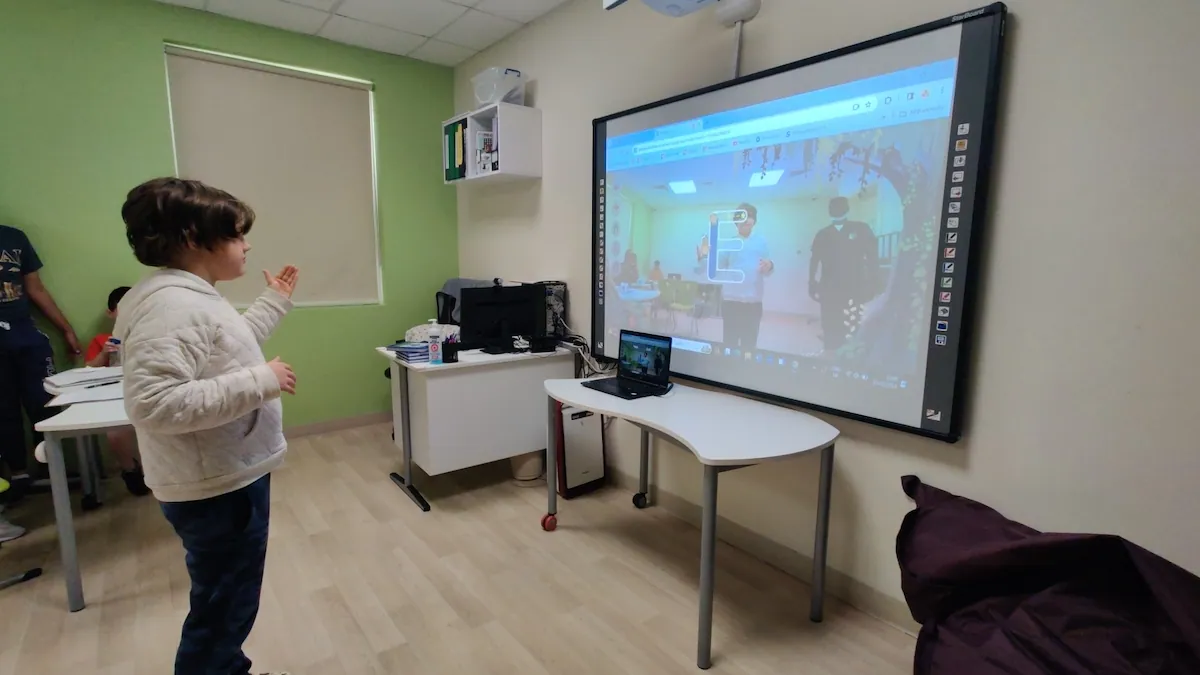
Frequently Asked Questions
What are gross motor skills activities for kids?
They are games and tasks that use the large muscles of the arms, legs and core. Running, jumping, balancing, throwing and climbing all count. They build coordination, posture, balance and the confidence to join in with physical play.
How often should children do gross motor activities?
Short daily sessions work better than one long session a week. Five to fifteen minutes most days is enough for a child to make progress, because motor skills improve through repetition rather than duration.
What are good indoor gross motor activities?
Freeze dance, animal walks, balloon keep-up, tape-line walking, indoor obstacle courses and rhythm copying all work in a small space with no equipment. Anything with a clear start and stop is easier to manage indoors than open running.
Can online games improve gross motor skills?
They can, provided the game requires real movement rather than tapping a screen, gives immediate feedback, and runs in short repeatable rounds. A game a child plays willingly ten times builds more skill than an exercise they do once.
Which activities suit a child who avoids movement?
Start with ones that have no failure state and no audience: tape-line walking, scarf tossing, mirror moves and animal walks. Scarves fall slowly, which gives a child far more time to react than a ball does, so early attempts tend to succeed.
How do I adapt these for a child with limited movement?
Most of the list can be done seated. Mirror moves, reach high and low, rhythm copying, scarf tossing and wall taps all work from a chair. Reduce the range asked for rather than the number of repetitions, and speak to an occupational therapist about what is realistic for your child.
Was this article helpful?
Written by

Last medically reviewed on September 9, 2026
How we reviewed this article:
- (2019). Guidelines on physical activity, sedentary behaviour and sleep for children under 5 years of age World Health Organization. https://www.who.int/publications/i/item/9789241550536
- (2024). CDC's Developmental Milestones — Learn the Signs. Act Early. Centers for Disease Control and Prevention. https://www.cdc.gov/ncbddd/actearly/milestones/index.html
- (2024). Bright Futures Guidelines for Health Supervision of Infants, Children, and Adolescents, 4th Edition American Academy of Pediatrics. https://publications.aap.org/brightfutures
- (2012). Understanding Motor Development: Infants, Children, Adolescents, Adults (7th ed.) McGraw-Hill.
September 9, 2026
Migrated from WordPress. Activities grouped by skill, sourced physical-activity guidance added, product sections consolidated.
January 25, 2026