
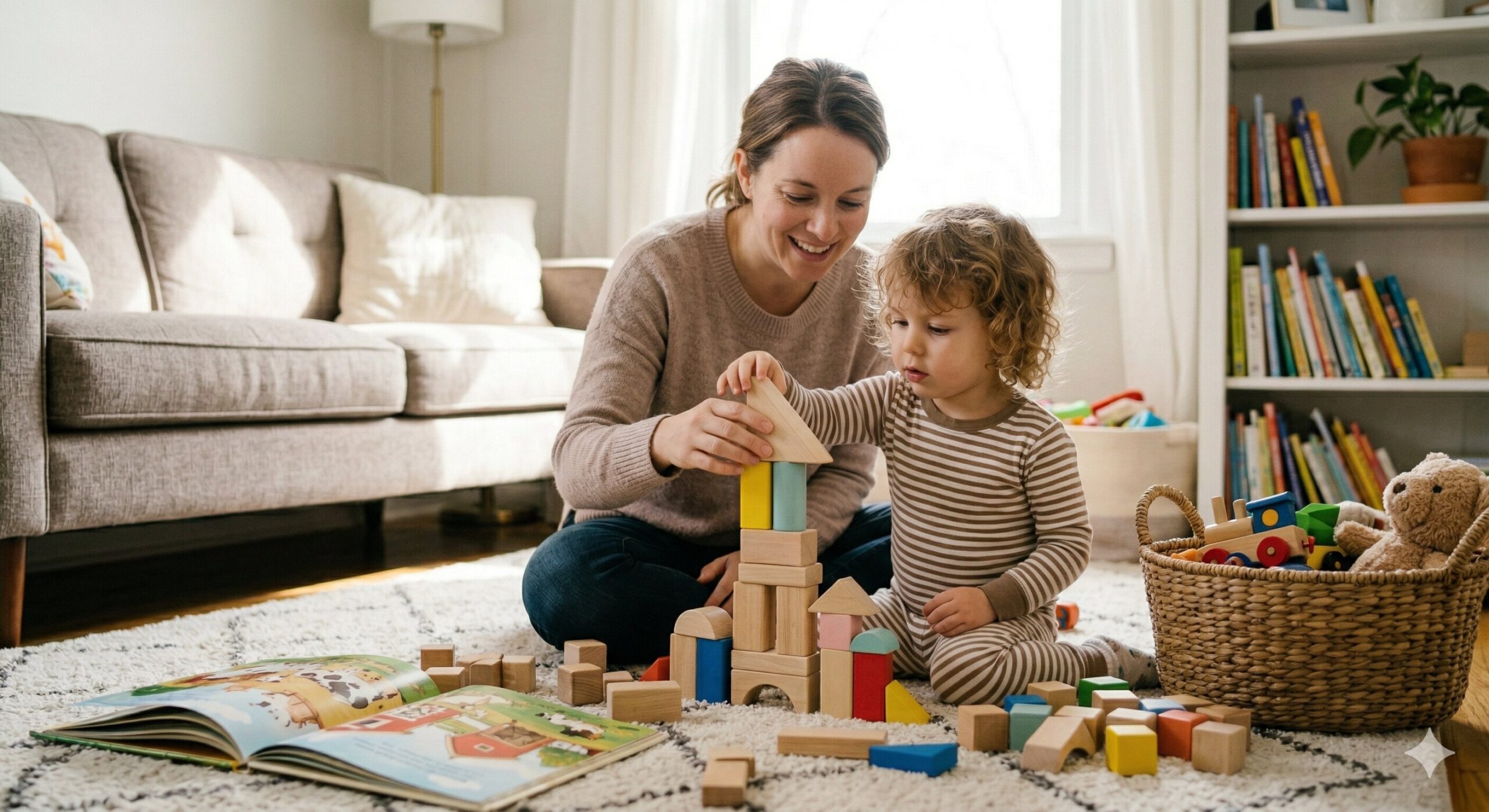
Preschoolers are constantly learning, even when it does not look like “learning” at all.
In the middle of ordinary, everyday moments, they are remembering what comes next, noticing patterns, asking endless questions, figuring out how things work, and solving small problems on their own. That is cognitive development in action. It is the steady growth of the thinking skills children use to understand the world around them.
At home, support does not need to feel like school. In fact, it usually works better when it does not. Young children learn most naturally through play, simple conversations, daily routines, repetition, and having the space to explore and figure things out for themselves.
Why Cognitive Development Matters in the Preschool Years:
Cognitive development shapes how children pay attention, remember information, solve problems, make connections, and stay engaged long enough to learn from what they are doing. These skills become part of everything else they do, from listening to a story to following a routine to joining in pretend play.
The preschool years matter because this is a stage of rapid change. Children begin moving from simple exploration toward more organized thinking. They start understanding what happened first and what happened next. They notice similarities and differences. They ask more thoughtful questions. They begin using memory in more practical ways.
This growth also builds confidence. A child who can remember a routine, solve a simple problem, or predict what comes next often feels more capable in everyday life.
What Cognitive Development Looks Like at Home:
At home, cognitive development often shows up in small, ordinary moments.
It can look like a child:
- remembering where their shoes belong
- finding the missing piece in a puzzle
- sorting toys by color or shape
- predicting the next part of a bedtime story
- noticing that something in the room has changed
- asking why something happened
- remembering what happened yesterday
- figuring out how to reach or build something
- following a short set of instructions
These moments may seem simple, but they are exactly how early thinking skills grow.
How to Support Cognitive Development in Preschoolers at Home:
The best support is usually part of everyday life. It does not need to be expensive, formal, or complicated. It just needs to give children regular chances to notice, remember, explore, compare, and solve.
Talk Through Everyday Moments:
One of the easiest ways to support cognitive development is simply to talk with your child during normal routines. Describe what you are doing. Ask simple questions. Give them time to respond.
Talking during meals, getting dressed, cleaning up, or walking outside helps children build attention, memory, and understanding. It also helps them connect language with what they see and experience in the moment.
Read the Same Books Again:
Repetition is powerful for preschoolers. When you read the same story more than once, children begin to remember what happens next, notice patterns, and make predictions. That is real cognitive work, even if it looks like simple story time.
You can support this by asking:
- What do you think happens next?
- Do you remember this part?
- What is different here?
- Why do you think that happened?
Use Sorting and Matching Activities:
Sorting socks, grouping toys, matching colors, or organizing snacks into simple categories all help children compare, classify, and notice patterns. These are strong early thinking skills, and they do not require special materials.
Let them Solve Small Problems:
Preschoolers build confidence when they get time to figure things out.
That might mean:
- finding where a missing item belongs
- working out how to stack blocks so they do not fall
- choosing which object fits a space
- deciding what comes first in a routine
It is tempting to help too quickly, but giving a child a little time to think is often where the learning happens.
Build Routines They Can Remember:
Daily routines help strengthen memory and sequencing. When children know what usually comes next, they are practicing order, recall, and prediction.
Simple routines like:
- wake up, brush teeth, get dressed
- tidy toys, wash hands, eat lunch
- bath, pajamas, story, bed
All help reinforce thinking skills in a way that feels natural.
Encourage Pretend Play:
Pretend play supports much more than imagination. It helps children remember roles, follow sequences, connect ideas, and practice simple problem-solving.
When a child pretends to run a shop, care for a baby doll, cook a meal, or be a teacher, they are using memory, planning, and symbolic thinking all at once.
Ask Open-Ended Questions:
Preschoolers do not need constant questioning, but they benefit from questions that help them think.
Try:
- Why do you think that happened?
- What could we try next?
- Which one is different?
- How did you know that?
- What should we do first?
These questions build reasoning instead of just recall.
Simple Home Activities That Support Thinking Skills:
You do not need structured lessons to help a preschooler think better. Some of the best home activities are already part of everyday life.
Puzzles:
Puzzles help children notice shapes, compare pieces, remember where something fits, and stay with a task.
Building Toys:
Blocks, magnetic tiles, and stacking toys support planning, balance, trial and error, and problem-solving.
Memory Games:
Simple matching games help with recall, attention, and noticing patterns. For children who enjoy more structured interactive play, brain games to help with memory can also be a useful way to build focus and memory through play.
Story Retelling:
After reading together, ask your child to tell you what happened. Even if the answer is incomplete, this helps build memory, sequencing, and comprehension.
Everyday Helping Tasks:
Setting the table, putting groceries in the right place, sorting laundry, or remembering a short instruction all support cognitive development in practical ways.
What to Avoid:
Support works best when it feels encouraging, not pressured.
Try to avoid:
- turning every activity into a test
- correcting too quickly
- stepping in before your child has time to think
- expecting long attention spans too early
- Comparing your child to others too often
Preschoolers learn best when they feel safe to try, make mistakes, and try again.
When a Child Needs More Support:
Some preschoolers benefit from more repetition, structure, and engaging ways to practice attention, memory, and problem-solving. This doesn’t mean they cannot build strong cognitive skills. It usually means they benefit from support that is clearer and easier to return to consistently.
If you are concerned that your child is struggling much more than expected with attention, memory, following routines, or simple problem-solving, it may help to speak with a pediatrician, teacher, or developmental professional.
Sources:
- CDC parenting and development guidance for preschoolers ages 3 to 5: (CDC)
- Harvard Center on the Developing Child on serve-and-return interactions and early brain development: (Harvard Center on Developing Child)