Most activity lists for children with Down syndrome are just general sensory play with the words "Down syndrome" added to the title. Finger painting, rice bins, nature walks. All fine, and none of it accounts for what is actually different about these children.
The useful version starts one step earlier, with the physical and sensory profile that comes with the condition, because that is what determines which activities land and which ones quietly fail.
Build Skills Through Play
AR games designed with therapists — for children with ADHD, ASD, DCD, and more. Just a laptop camera. No downloads.
Try Free for 14 DaysWhat to Account For First
Four things shape how activities should be set up.
Low muscle tone
Hypotonia is present in almost every child with Down syndrome. Muscles work, but they hold less baseline tension, which means more effort to stay upright and faster fatigue. Practically: an activity that requires sitting unsupported is partly a strength task before any of the intended learning happens. Supporting the trunk, or letting a child work lying on their front, often unlocks a task they seemed unable to do.
Loose joints
Ligamentous laxity means joints move further than usual. Grip and hand positions can be unstable, which is why fine motor work often improves with thicker tools rather than more practice with thin ones.
Hearing and vision
Both are affected more often than in other children, and hearing loss is frequently the fluctuating kind caused by fluid in the middle ear, so it can come and go without anyone noticing. A child who follows instructions one week and not the next may be hearing differently, not being difficult. The AAP recommends regular audiology and ophthalmology review for this reason, and it is worth knowing where your child is on both before deciding an activity is too hard.
Visual learning is usually the stronger channel
Children with Down syndrome typically process what they see more easily than what they hear, and understanding usually runs well ahead of speech. Two consequences follow. Show rather than tell wherever possible. And do not read a child's ability from what they can say, because the gap between what they understand and what they can express is often wide.
Sensory Activities
Sensory play here has a specific job: giving the body more information so it can organize movement better, and giving a child a way to regulate.
- Deep pressure input. Firm hugs, rolling a child up in a blanket, pushing against a wall, or lying under a weighted cushion. This is usually the most calming input, and it is the one most often skipped in favor of visually exciting activities.
- Heavy work. Carrying a basket of books, pushing a laundry basket across the floor, pulling a loaded wagon. For a child with low tone this builds strength and provides regulating input at the same time.
- Texture bins with a purpose. Rice, dried beans, or water with objects hidden in them. Give a specific target, such as find all four spoons, rather than open exploration, which tends to stall.
- Oral motor play. Blowing bubbles, drinking through a straw, blowing a cotton ball across a table. Low tone affects the mouth as well, and this supports both feeding and speech.
- Sensory stories. A short story where each page has something to touch, shake, or smell. This plays to visual and tactile strengths while carrying language.
Fine Motor Activities
The aim is stability first, then precision. A hand that is working hard to stay steady has nothing left for accuracy.
- Work on a vertical surface. Paper taped to a wall, a whiteboard, or an easel. This positions the wrist correctly and builds shoulder stability, which is the foundation everything else sits on.
- Thicker tools. Chunky crayons, chunky brushes, or a pencil grip. Loose joints make thin tools genuinely harder to control.
- Tearing and crumpling paper. Simple, satisfying, and it builds the hand strength that pencil control later needs.
- Tongs and tweezers. Moving pompoms between bowls. Adjustable difficulty just by changing the size of what is being picked up.
- Playdough with resistance. Firmer dough does more than soft dough. Hiding beads in it to be dug out gives the activity a goal.
Gross Motor Activities
- Obstacle courses. Crawling under, stepping over, walking along a line. Endlessly adjustable and it works balance without it feeling like exercise.
- Animal walks. Bear walks and crab walks put weight through the arms, which builds the shoulder stability that hand skills depend on.
- Ball games close in. Rolling and catching at short range, with a larger and slightly deflated ball, which is easier to grip and slower in the air.
- Stairs with a rail. Ordinary, repeated, and one of the better strength activities available at home.
- Dancing to a clear beat. Rhythm supports motor planning, and music is often a genuine strength.
Language and Social Activities
Since understanding usually outpaces speech, the goal is giving a child more ways to communicate rather than pushing harder on words.
- Signs alongside speech. Using a small set of signs with the spoken word reduces frustration and does not slow speech down.
- Picture choices. Two images to point at gives a child a decision they can express, which is often the missing ingredient in a difficult routine.
- Turn-taking games with a clear signal. Rolling a ball back and forth, or a simple game with an obvious my-turn moment. Visual clarity matters more than the game itself.
- Repeated books. The same story many times, pausing before a familiar word so the child can fill it in.
One Safety Point Worth Knowing
Around 15% of young people with Down syndrome have atlantoaxial instability, which is extra movement between the top two vertebrae of the neck. Almost all of them have no symptoms from it.
Current AAP guidance does not recommend routine spinal x-rays for children without symptoms. What it does recommend is that families know the symptoms that need urgent review, including new neck pain, a change in how a child walks, loss of bladder or bowel control that had been established, or new weakness or clumsiness in the arms or legs.
For activities, the practical version is this: before starting anything that loads or twists the neck, such as gymnastics, somersaults, trampolining, diving, or contact sports, raise it with your child's doctor. Everything listed on this page is low risk on that count, but activity lists that recommend somersaults and trampolines without mentioning any of this are common, and it is worth knowing why that matters.
Making Activities Actually Work at Home
The difference between an activity that helps and one that gets abandoned is usually not the activity.
Keep sessions short and frequent. Ten minutes several times a week beats an hour on Sunday, and it fits better around a child who fatigues faster than their peers.
Set the difficulty so the child succeeds most of the time. Roughly four out of five attempts working is about right. Below that, most children stop trying, and children who have already met a lot of difficulty stop faster.
Change one thing at a time. If an activity is too hard, adjust the position, the tool, or the target, not all three, so you learn what actually made the difference.
Show, do not explain. A demonstration is worth several sentences, and this is the single most reliable adjustment for a child whose visual processing is the stronger channel.
Follow the interest. If your child is fixed on trains, the sorting activity should involve trains. Motivation carries more weight than any specific exercise design.
Screen-based games can fit here too, provided they involve the body rather than only the fingers. Games that read whole-body movement through a camera give the visual clarity that suits how these children learn while still doing motor work, and the built-in feedback means a child can see they got it right without waiting for an adult to say so.
Whole-Body Games for Motor Practice
Both read movement through the laptop camera, so a child works on balance and coordination with immediate visual feedback rather than waiting for an adult to confirm.

When to Involve a Therapist
Home activities complement therapy rather than replace it. An occupational therapist or physiotherapist can tell you which specific thing is holding a skill back, which is difficult to work out from the outside. A child who cannot manage buttons may be limited by hand strength, by finger isolation, or by not being able to stabilize their shoulder, and each of those needs a different activity.
Speech and language therapy is worth pursuing early, particularly around communication routes such as signing and pictures, given how commonly expressive language lags behind understanding.
See It In Action
Book a free demo and see how WonderTree works for your child, classroom, or therapy center.
Book a Free Demo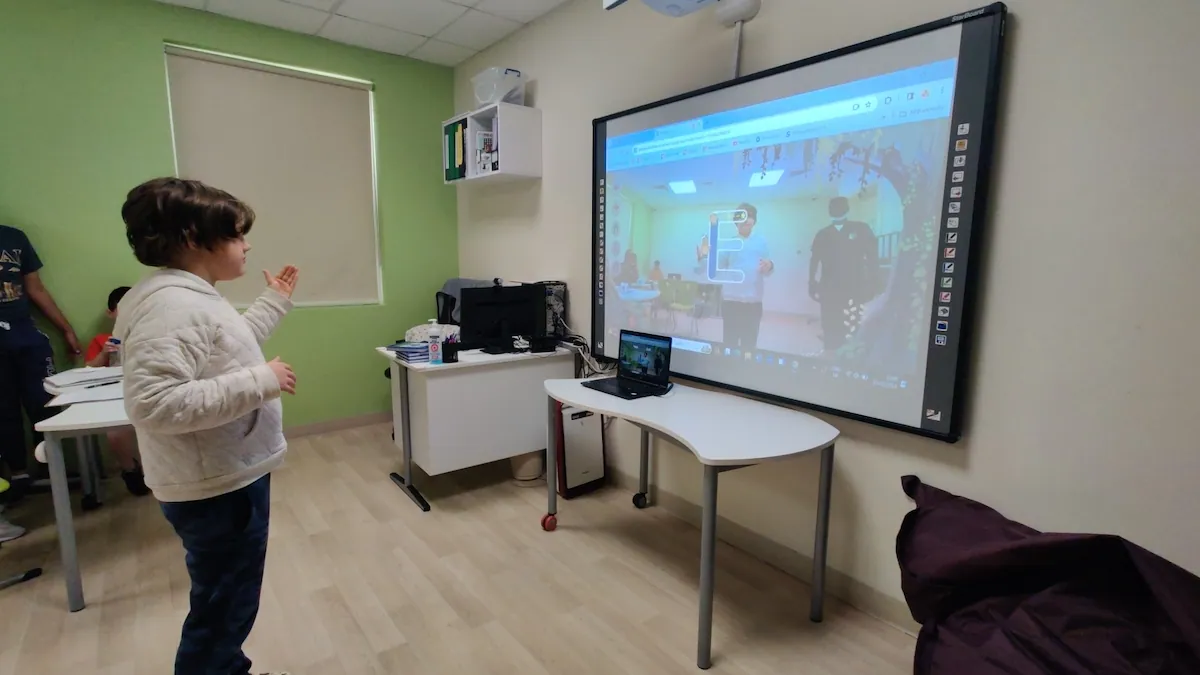
Frequently Asked Questions
What are good sensory activities for a child with Down syndrome?
Deep pressure input such as firm hugs or being rolled in a blanket, heavy work such as carrying or pushing something weighted, texture bins with a specific target to find, oral motor play such as blowing bubbles or drinking through a straw, and sensory stories with something to touch on each page. Deep pressure and heavy work are the most useful and the most commonly skipped.
How do activities need to be adapted for Down syndrome?
Account for low muscle tone by supporting the trunk or letting the child work lying on their front, since staying upright is itself effortful. Use thicker tools, because loose joints make thin ones harder to control. Demonstrate rather than explain, since visual processing is usually the stronger channel. And keep sessions short, because these children fatigue faster than their peers.
Are there activities a child with Down syndrome should avoid?
Around 15% of young people with Down syndrome have atlantoaxial instability, meaning extra movement between the top two vertebrae, though almost all have no symptoms from it. Before starting anything that loads or twists the neck, such as gymnastics, somersaults, trampolining, diving, or contact sports, discuss it with your child's doctor. Current AAP guidance does not recommend routine x-rays for children without symptoms, but families should know the warning signs, including new neck pain, a change in walking, or new weakness in the arms or legs.
Why does my child understand more than they can say?
This gap is characteristic of Down syndrome. Receptive language, meaning what a child understands, usually runs well ahead of expressive language, meaning what they can produce. Low muscle tone affects the mouth as well as the body, which adds to it. The practical response is to give more routes to communicate, such as signing alongside speech and picture choices, rather than pushing harder on words.
Do computer games help children with Down syndrome?
They can, provided the game involves the body rather than only the fingers. Games that read whole-body movement give the visual clarity that suits how these children learn while still doing motor work, and the immediate feedback lets a child see they got something right without waiting for an adult. They work best alongside physical activities and therapy rather than instead of them.
How long should an activity session be?
Short and frequent beats long and occasional. Around ten minutes several times a week works better than an hour once, and it fits a child who fatigues faster because of low muscle tone. Aim for a difficulty where the child succeeds roughly four times out of five, since below that most children stop trying.
Should we see a therapist as well as doing activities at home?
Yes, they do different jobs. A therapist can identify which specific thing is limiting a skill, which is hard to work out from the outside. A child who cannot manage buttons might be limited by hand strength, by finger isolation, or by shoulder stability, and each needs a different activity. Home practice then makes that work stick between sessions.
Was this article helpful?
Written by

Last medically reviewed on September 9, 2026
How we reviewed this article:
- (2022). Health Supervision for Children and Adolescents With Down Syndrome Pediatrics, 149(5), e2022057010. https://doi.org/10.1542/peds.2022-057010
- (2025). Atlantoaxial Instability and Down Syndrome NDSS. https://www.ndss.org/resources/atlantoaxial-instability-syndrome/
September 9, 2026
Rewritten around the physical and sensory profile of Down syndrome rather than generic sensory play, with added guidance on atlantoaxial instability.
June 11, 2024