The first years of a child's life are not just memorable — they are foundational. The skills a child builds before the age of eight shape how they think, communicate, relate to others, and navigate the world for the rest of their life.
This period has a name: early childhood development. And while every parent recognises the milestones — first steps, first words, first friendships — fewer understand what is actually happening beneath the surface, why it matters so much at this specific age, and what can be done to actively support it.
This guide covers what early childhood development is, the five developmental domains every parent should know, and why this window is especially critical for children with autism, ADHD, or other developmental differences.
What Is Early Childhood Development?
Early childhood development, often abbreviated as ECD, is the process by which children grow physically, cognitively, socially, emotionally, and linguistically during the years from birth to around age eight.
The World Health Organization defines ECD as covering the full range of children's physical, social, emotional, and cognitive development — shaped by the quality of care, nutrition, safety, and stimulation a child receives in these early years.
What this definition makes clear is that early childhood development is not simply something that happens on its own. It is actively shaped by the environments and experiences children are placed in. Parents, caregivers, educators, and therapists all play a direct role in determining how strong this foundation becomes.
Why the Early Years Are the Most Critical Window
From birth to age three, the brain produces more than one million new neural connections every second. By age five, the brain has reached approximately 90% of its adult size.
This pace of growth is what makes early childhood unlike any other developmental period. Neural plasticity — the brain's ability to reorganise and form new connections based on experience — is at its peak during these years. Positive experiences, responsive caregiving, and stimulating play all strengthen neural pathways that support thinking, emotional regulation, and social connection. Chronic stress, neglect, or unaddressed developmental difficulties have an outsized impact during this window precisely because so much of the brain's structure is still being built.
Harvard University's Center on the Developing Child describes this as building the architecture of the brain from the ground up — early experiences literally shaping the brain's physical structure in ways that influence outcomes across a lifetime.
For children with neurodevelopmental differences such as autism, ADHD, cerebral palsy, or Down syndrome, this window is especially important. Early identification and targeted support during this period consistently produce meaningfully better outcomes than intervention that starts later, when neural pathways are less flexible.
Build Skills Through Play
AR games designed with therapists — for children with ADHD, ASD, DCD, and more. Just a laptop camera. No downloads.
Try Free for 14 DaysThe 5 Domains of Early Childhood Development
ECD frameworks from the WHO, CDC, and American Academy of Pediatrics all organise development into five interconnected domains. None of these exists in isolation — progress in one area consistently supports and reinforces growth in the others.
Cognitive Development
Cognitive development in early childhood is how children learn to think, reason, remember, and solve problems. In the first years of life, children move from simple cause-and-effect understanding to more complex reasoning — recognising patterns, categorising objects, understanding sequences, and building early mathematical concepts.
Cognitive development is closely tied to attention and working memory. Children who receive rich cognitive stimulation through conversation, exploration, and problem-solving play tend to enter school with stronger foundational abilities across all areas of learning.
Language and Communication Development
Language development is one of the most powerful predictors of a child's long-term outcomes — and one of the most underestimated aspects of early childhood development.
Children begin building language well before their first word. They respond to tone of voice, track facial expressions, and associate sounds with people and objects from the earliest weeks of life. By age three, most children have a vocabulary of around 1,000 words and are forming multi-word sentences. By age five, language is being used to narrate, explain, question, and negotiate social situations.
For children with autism, speech and language delays, or hearing differences, this is the domain where early intervention has the greatest and most lasting impact. Language and communication underpin almost everything else — social interaction, emotional expression, academic learning, and daily independence.
Social-Emotional Development
Social-emotional development covers how children understand their own emotions, manage their feelings, build relationships, and respond to others. In the earliest months, this centres on secure attachment — the bond between a child and their primary caregivers. As children grow, they begin recognising emotions in others, developing empathy, learning to share and take turns, and building the capacity to regulate strong feelings like frustration, fear, or excitement.
Social-emotional development is particularly relevant for children with ADHD, autism spectrum disorder, and anxiety-related conditions, where emotional regulation and social interpretation are often areas of challenge. Building these skills early — through play, consistent routine, and warm responsive caregiving — creates a foundation that supports mental health and relationships well into adulthood.
Physical and Motor Development
Physical development in early childhood covers both gross motor skills — large body movements like crawling, walking, running, and jumping — and fine motor skills — the precise hand and finger movements involved in grasping objects, drawing, dressing, and eventually writing.
Motor development is closely tied to sensory processing. Children who struggle with sensory integration — as many children with cerebral palsy, autism, or developmental coordination disorder do — often show delays in motor milestones that have downstream effects on daily functioning and self-confidence. Occupational therapists and physiotherapists typically focus much of their early intervention work in this domain, using play-based approaches to build strength, coordination, and body awareness.
Neurological Development
Underlying all four domains above is neurological development — the physical maturation of the brain and nervous system that makes all other development possible.
The brain is not a fixed structure. It is continuously shaped by experience, and this shaping is fastest in the first eight years. Every interaction, activity, and environment a child encounters contributes to how their neural architecture is organised. Enriching, predictable, stimulating environments — combined with warm, responsive caregiving — build stronger neural foundations across every developmental domain.
Early Childhood Development in Children with Special Needs
For children with autism, ADHD, cerebral palsy, Down syndrome, or developmental coordination disorder, early childhood development spans the same five domains — but the profile of strengths and challenges looks different for every child.
A child with autism may develop cognitively ahead of peers in some areas while finding social-emotional and language development significantly harder. A child with ADHD may have strong language and social motivation but persistent difficulty with the attention and self-regulation that structured learning requires. A child with cerebral palsy may have strong language and cognitive development alongside significant motor challenges that affect independence in daily tasks.
Generic milestone checklists only tell part of the story. What matters for a child with developmental differences is understanding their individual profile — where they are strong, where they need targeted support, and what kinds of environments and interventions best match how their brain learns.
Early identification during the ECD window — whether through occupational therapy, speech-language therapy, applied behavior analysis, physiotherapy, or structured educational programs — consistently produces better long-term outcomes than waiting. The brain is more plastic, pathways are more flexible, and the habits of learning that will carry a child through school and beyond are being established right now.
How Play Supports Early Childhood Development
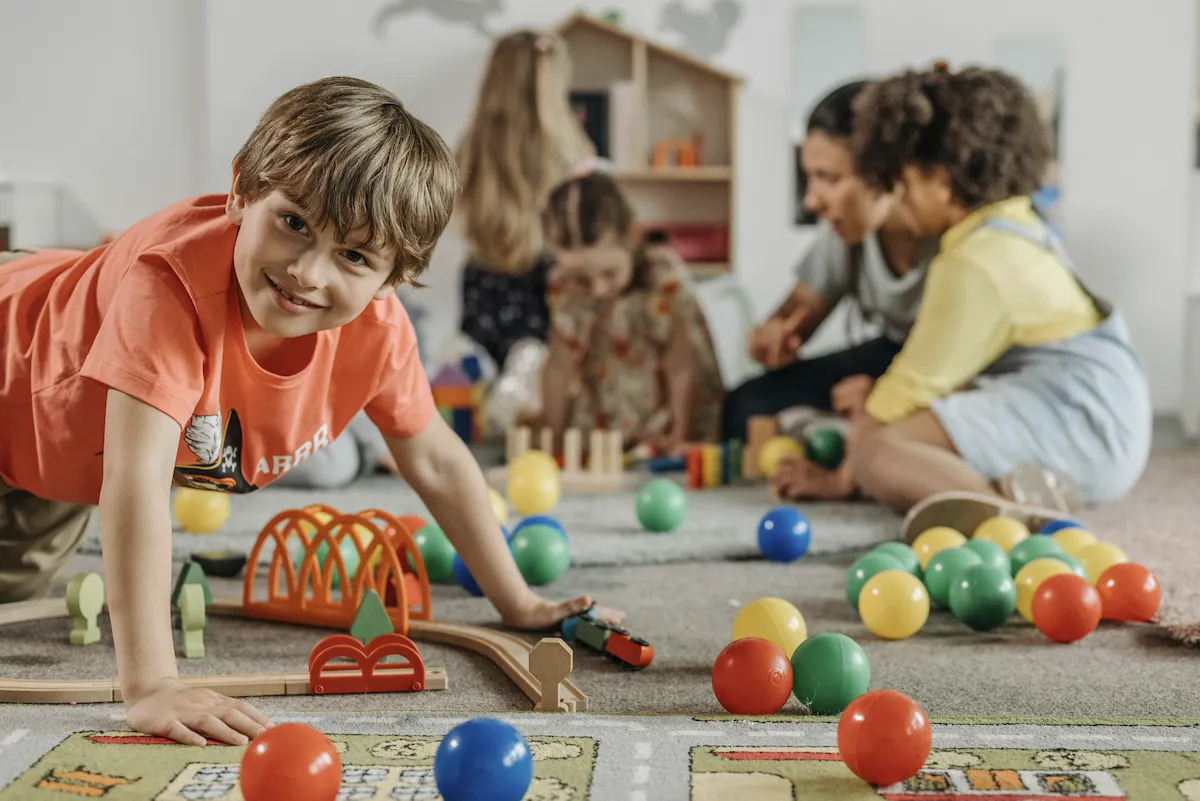
Play is not a break from development. Play is how early childhood development happens.
Research endorsed by the American Academy of Pediatrics shows that play — especially child-directed, open-ended play — directly supports cognitive development, language acquisition, social skills, emotional regulation, and motor development simultaneously. Children make sense of their world, practise communication, test cause-and-effect reasoning, and learn to manage frustration through play in a way that structured instruction cannot replicate at this age.
For children with developmental differences, therapeutic play — structured around specific developmental goals — is particularly effective. When an activity feels like a game, children engage more willingly, sustain attention longer, and transfer skills more readily to daily life than in traditional therapy formats.
Games That Support Early Development
Play is how young children learn. These two turn that into shape, colour and movement practice.


How WonderTree Supports Early Childhood Development
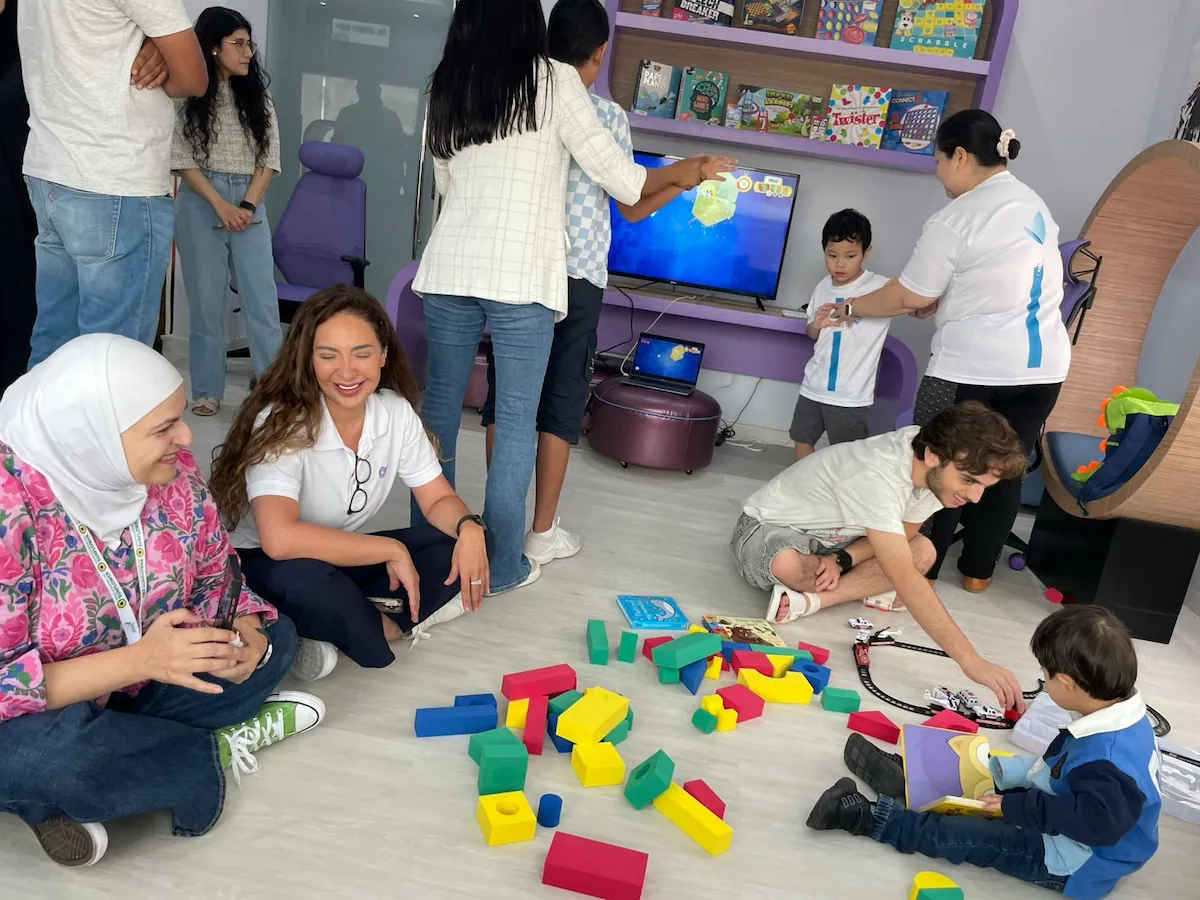
WonderTree's augmented reality games are built on the principle that play is the most natural and effective vehicle for early skill development — especially for children with special needs.
Games like Bubble Pop target cognitive skills such as sustained attention, visual tracking, and impulse control through active, body-based play. Other games on the platform build fine motor coordination, pattern recognition, and cause-and-effect reasoning — each mapped to the specific developmental domains a child is working on.
For children with autism, ADHD, cerebral palsy, or Down syndrome between ages 2 and 15, WonderTree provides a structured play environment that parents and therapists can use alongside existing intervention. It is not a replacement for clinical therapy — it is a way to extend meaningful practice through the kind of motivated, repeated engagement that drives genuine developmental gains.
See It In Action
Book a free demo and see how WonderTree works for your child, classroom, or therapy center.
Book a Free Demo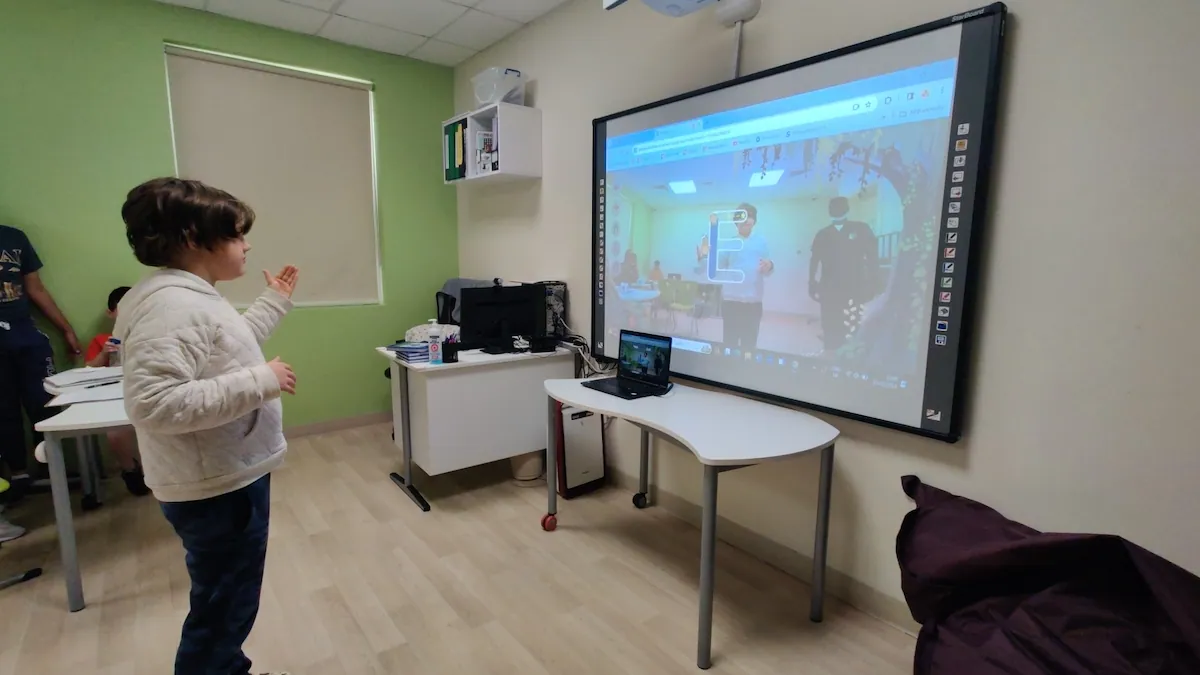
Frequently Asked Questions
What are the 5 domains of early childhood development?
The five domains are cognitive development, language and communication development, social-emotional development, physical and motor development, and neurological development. None of these exists in isolation — growth in one area typically supports and reinforces growth in the others.
What are signs of developmental delay in young children?
Key signs include no babbling by 12 months, no single words by 16 months, no two-word phrases by 24 months, any loss of previously acquired skills at any age, persistent difficulty with motor tasks compared to peers, or ongoing challenges with social interaction and emotional regulation. If you notice these patterns, speaking with your pediatrician promptly is always the right step.
How does early childhood development differ for children with autism or ADHD?
Children with autism or ADHD develop across the same five domains, but their profile differs. A child with autism may have advanced cognitive skills alongside significant social-communication challenges. A child with ADHD may have strong language and social motivation but persistent difficulty with attention and self-regulation. Early, individualized support targeting each child's specific profile consistently produces the best outcomes.
What activities best support early childhood development at home?
Reading aloud, open-ended play, singing, puzzles, physical play, and simple turn-taking games all support multiple developmental domains at once. The most powerful factor is not the activity itself but the quality of interaction — talking with children, following their lead, and responding warmly and consistently to their attempts to communicate and connect.
When should parents be concerned about their child's development?
If a child is consistently not meeting milestones across more than one developmental domain, it is worth discussing with a pediatrician. Red flags include no babbling by 12 months, no words by 16 months, no two-word phrases by 24 months, or any regression in skills at any age. Early referral is always preferable to a wait-and-see approach.
How do interactive games support early childhood development?
Well-designed interactive games engage attention, require problem-solving, and involve hand-eye coordination and cause-and-effect reasoning — mapping directly onto cognitive, motor, and social-emotional developmental domains. For children who find traditional learning formats difficult, game-based engagement often produces longer, more motivated practice and better skill generalisation to daily life.
Was this article helpful?
Clinically Reviewed by

Written by

Last medically reviewed on May 11, 2026
How we reviewed this article:
- (2020). Improving Early Childhood Development: WHO Guideline World Health Organization. https://www.who.int/publications/i/item/97892400020986
- (2023). Brain Architecture Harvard University. https://developingchild.harvard.edu/science/key-concepts/brain-architecture/
- (2018). The Power of Play: A Pediatric Role in Enhancing Development in Young Children Pediatrics, 142(3), e20182058. https://publications.aap.org/pediatrics/article/142/3/e20182058/38649/The-Power-of-Play-A-Pediatric-Role-in-Enhancing
- (2024). Learn the Signs. Act Early. CDC. https://www.cdc.gov/ncbddd/actearly/index.html
May 11, 2026
Expanded with five-domain framework, special needs section, clinical sources, and review by Syeda Rida Asad.
April 12, 2025