Most parents meet the phrase "sensory integration" for the first time in a therapy report, sandwiched between words they also do not recognise. It sounds like jargon. It is actually a description of something your child's brain is doing every second of the day, and when it goes slightly wrong, it shows up in places nobody thinks to connect to it: the tantrum at the mall, the jacket that takes ten minutes, the child who cannot sit still through dinner.
We put that to Dr. Eqab Al-Badarneh, an occupational therapist certified in sensory integration through the University of Southern California, in a live webinar we hosted with The Butterfly. What follows is drawn from that session, with his quotes lightly edited for clarity. He has also published a shorter companion piece, a simple guide to sensory integration, on LinkedIn.
What sensory integration actually is
Strip away the clinical language and the idea is simple. Your nervous system is taking in information from every sense at once. Something has to decide what matters.
Dr. Eqab's favourite demonstration is the room you are sitting in right now. You are receiving the screen through your eyes. You are receiving the chair through pressure on your back and legs. There may be an air conditioner running, a child in another room, the weight of a watch on your wrist. All of it arrives at once.
Your brain keeps the sound of the words you are reading and turns the rest down. That selection process, happening constantly and without your involvement, is sensory integration. When it works, you never notice it. His analogy for what it means when it does not:
One misconception he wanted corrected early: this is not a special-needs topic.
If you have ever clicked a pen repeatedly during a long meeting, that was your own nervous system asking for input to lift your alertness back up. Same mechanism. Different threshold.
Build Skills Through Play
AR games designed with therapists — for children with ADHD, ASD, DCD, and more. Just a laptop camera. No downloads.
Try Free for 14 DaysThe two senses nobody taught you
School teaches five senses. Occupational therapists work with eight, and the three you were never told about are the ones that explain the most behaviour.
Proprioception: knowing where your body is
Receptors in your bones, muscles and ligaments detect every movement, large or small, and tell your brain where your body is in space. You can touch your nose with your eyes shut because of it. Four skills sit underneath it, and Dr. Eqab returns to them repeatedly because almost everything else traces back:
- Motor planning — working out the sequence of movements before you make them
- Bilateral motor coordination — getting two sides of the body to cooperate
- Force — how much power a movement needs
- Timing in space — knowing when to close your hand to catch a thrown ball
Vestibular: knowing which way is up
The inner ear holds fluid and hair cells that register the position and movement of your head. It governs balance and weight shifting. A child whose vestibular system is under-responsive will chase movement all day: running, spinning, climbing the furniture. They are not misbehaving. They are topping up.
Tactile: not one sense but four
Touch is usually treated as a single channel. It is not. Deep touch, light touch, vibration and temperature are processed separately, which is why a child can crave bear hugs and still scream at a clothing label. Those are two different systems giving two different answers.
How it shows up in an ordinary day
Ask Dr. Eqab for an example and he does not reach for a clinical case. He reaches for a jacket.
To put one on, a child has to plan the sequence before moving: this arm into this sleeve, push back, then the other. That is motor planning. They have to know where their own shoulder is without seeing it, and pull the jacket into place behind them. That is body awareness. They have to use both hands in different roles at the same time to settle it. That is bilateral coordination. Then they have to find a zip pull by feel and grade their grip. That is tactile discrimination.
Four systems, one jacket, and if any of them is slow the whole thing stalls. From the outside it reads as a child who is being difficult about getting dressed.
He makes the same point about adults driving into a roundabout. You judge how much force the steering needs, track vehicles in your peripheral vision, and listen for engines. And when the road gets difficult, almost everyone reaches over and turns the radio down. Nobody teaches you that. Your brain eliminates one input to free capacity for the others.
What parents often notice without naming it
- Proprioception: seeks deep hugs, squeezes into tight spaces, is constantly pushing or leaning or crashing into things
- Vestibular: runs rather than walks, climbs furniture, spins without getting dizzy
- Tactile: either avoids touching anything, or needs to touch everything; the label in the T-shirt becomes a daily battle
Dr. Eqab is careful here, and the caution is worth repeating: a preference is not a problem. Plenty of children simply dislike certain textures. The question is whether it is interfering with ordinary life, which is a judgement for an assessment, not a checklist.
Screen-based play can be part of the picture, because a camera-based game asks for the same motor planning and coordination as a physical one while giving instant, predictable feedback. These are the two Dr. Eqab named as the ones he used in his own clinic:
Camera-Based Games for Motor Planning
The two games Dr. Eqab used in his own clinic to work on motor planning and bilateral coordination between sessions.


Why one child seeks and another avoids
Two children, one classroom, opposite behaviour. Dr. Eqab explains it with a tank.
Everyone has a threshold, a level of sensory input the nervous system needs in order to feel settled. Reach it and you can attend to the world. What differs is how quickly a person gets there.
A child with a high threshold takes in input but does not reach the level, so they go and generate more: running, jumping, spinning, stimming. A child with a low threshold hits the level almost immediately, so ordinary input becomes too much and they start shutting it out. In a mall, that is the child with their hands clamped over their ears.
This maps closely onto the model occupational therapist Winnie Dunn published in 1997, which crosses neurological threshold with active or passive response to give four patterns: low registration, sensation seeking, sensory sensitivity and sensation avoiding. It remains the framework behind the Sensory Profile assessment used in clinics today.
What makes this more than a classification exercise is what Dr. Eqab says happens next. A child who is overwhelmed in the mall every week for a year does not stay neutral about malls. The distress attaches itself to the place, then to the idea of the place.
He then walks it up the chain. Compromise attention and you compromise motor imitation, eye contact and following instructions, the skills he calls pre-learning. Weaken those and cognition suffers, then communication, then language, then social interaction, then emotional regulation. His demonstration: picture yourself in a meeting while an urgent call comes in. You still hear the speaker but you are not attending to him, and if asked to repeat what he just said you would manage a word or two. Ask twice and you would stop meeting his eye.
The most common mistake he sees
Asked for the single most frequent error parents make, he did not hesitate, and the answer may be the most useful thing in the session.
A child is hyperactive, so the family buys a trampoline and gives them free run of it. Reasonable. It is also, he says, the wrong move.
The activity stops delivering and the child needs steadily more of it. His analogy: a new watch is noticeable for a few days, then you forget you are wearing it. But a smartwatch that buzzes keeps announcing itself, indefinitely.
The fix he gives is not to remove the trampoline. It is to add what he calls an adaptive response — a small demand, and an adult in the loop.
Jumping alone is consumption. Jumping and catching is a demand on motor planning, timing and coordination, and it does not habituate the same way. The same test applies to anything, screens included: if it is not interactive, he would not use it.
What actually helps at home
He resisted giving a list of activities, and his reason is worth understanding rather than working around: there is no protocol, because the right input, duration and repetition differ for every child, and a parent handed a generic activity list will run it regardless of whether it fits. What he offers instead is a posture.
Play more. Talk more. More interaction is more sensory experience, and more experience is what the brain learns from. Weight it toward gross motor work such as throwing and catching a ball.
Look behind the behaviour, not at it. This is the piece he most wanted parents to take away. Take a blank sheet of paper. Write down what your child does. Then write what might sit underneath it. Is something in the environment doing this? A sound, a light, the colour of the food, the tone of a particular voice?
Expect progress to be invisible for a while. He is candid that sensory work is harder to feel good about than speech therapy, where a first word is unmistakable. You are working on the nervous system, and there is no equivalent moment. That is a reason to be patient with it rather than to abandon it.
See an occupational therapist for an assessment if a child is constantly moving and cannot settle, or if daily routines like dressing, eating or sleeping are consistently difficult. A sensory profile identifies which systems are involved, which is what turns guesswork into a plan.
What the evidence does and does not support
"Sensory processing disorder" is not a DSM-5-TR diagnosis, and the American Academy of Pediatrics advises against diagnosing it as a standalone condition, since sensory symptoms usually sit alongside another condition that deserves a full evaluation. That is a caution about labelling, not a claim the difficulties are imaginary. On treatment, a 2014 randomised trial by Schaaf and colleagues found Ayres Sensory Integration outperformed usual care for autistic children aged four to eight; a 2015 review by Case-Smith and colleagues called the evidence promising but limited by small samples. The reasonable position: an assessment by a qualified OT is worth doing, and the adjustments above cost nothing to try.
See It In Action
Book a free demo and see how WonderTree works for your child, classroom, or therapy center.
Book a Free Demo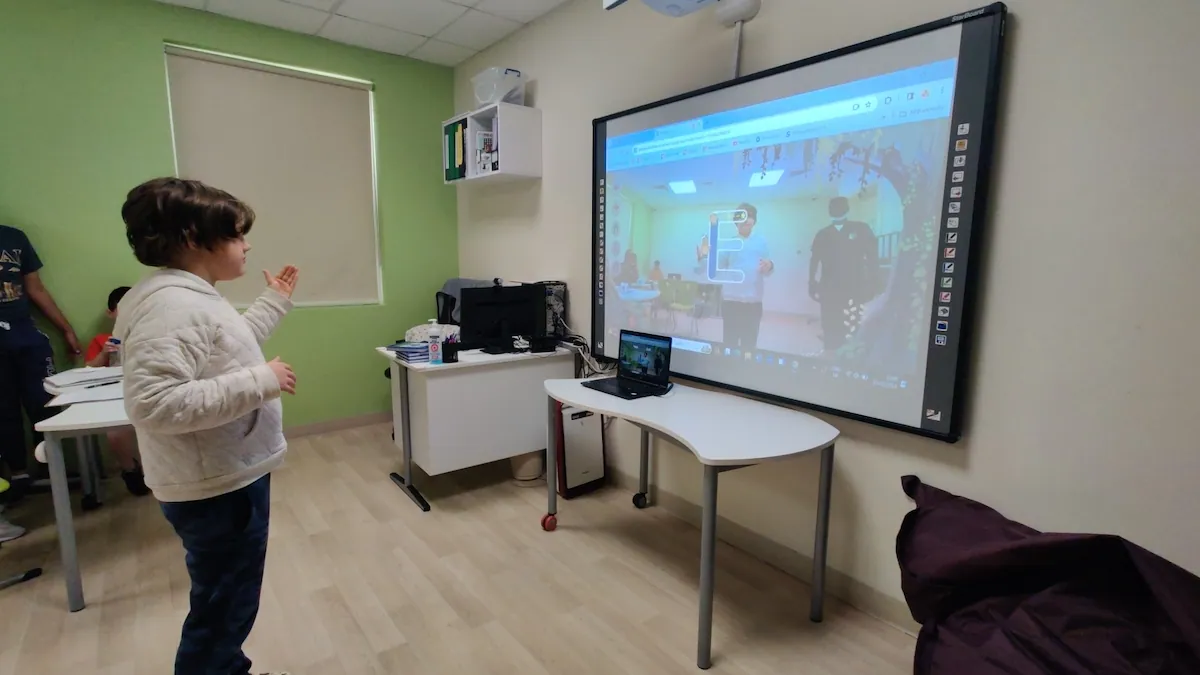
Frequently asked questions
What is sensory integration in simple terms?
It is the process your brain uses to take in information from all your senses at once, filter out what does not matter, and organise the rest so you can respond to what is in front of you. It runs constantly and without conscious effort. You notice it only when it is not working smoothly.
What are proprioception and the vestibular sense?
Proprioception is body awareness: receptors in bones, muscles and ligaments tell your brain where your body is in space, which underpins motor planning, using both sides of the body together, judging force, and timing. The vestibular sense sits in the inner ear and registers head position and movement, governing balance and weight shifting. Together with touch, these are the systems occupational therapists focus on most.
Is sensory integration only relevant to autistic children?
No. Every person integrates sensory information all day long. Dr. Eqab describes this as one of the most common misconceptions he encounters. Children with autism, ADHD or developmental delays may have more difficulty with it, but the process itself is universal, which is why adults click pens in meetings.
At what age can sensory difficulties be identified?
Sensory profiles exist for infants, and early signs can appear in rooting and sucking reflexes or in a baby who resists being held closely. Dr. Eqab prefers not to apply any label before about two and a half years, and notes that premature infants show higher rates in the research. Early observation is useful; early labelling is not.
Is a trampoline good for a hyperactive child?
Only with structure. Dr. Eqab warns that unlimited free access causes the child to habituate, so the same session gradually stops working and they need more of it. Add an adaptive response instead: jump twice, then move a ball between baskets, or throw at a target. The demand is what makes it therapeutic rather than merely consuming.
Was this article helpful?
Featuring

Written by

Last medically reviewed on September 21, 2026
How we reviewed this article:
- (1997). The impact of sensory processing abilities on the daily lives of young children and their families: A conceptual model Infants & Young Children, 9(4), 23-35. https://journals.lww.com/iycjournal/abstract/1997/04000/the_impact_of_sensory_processing_abilities_on_the.5.aspx
- (2012). Sensory integration therapies for children with developmental and behavioral disorders Pediatrics, 129(6), 1186-1189. https://pubmed.ncbi.nlm.nih.gov/22641765/
- (2014). An intervention for sensory difficulties in children with autism: A randomized trial Journal of Autism and Developmental Disorders, 44(7), 1493-1506. https://pubmed.ncbi.nlm.nih.gov/24214165/
- (2015). A systematic review of sensory processing interventions for children with autism spectrum disorder Autism, 19(2), 133-148. https://pubmed.ncbi.nlm.nih.gov/24477447/
September 21, 2026